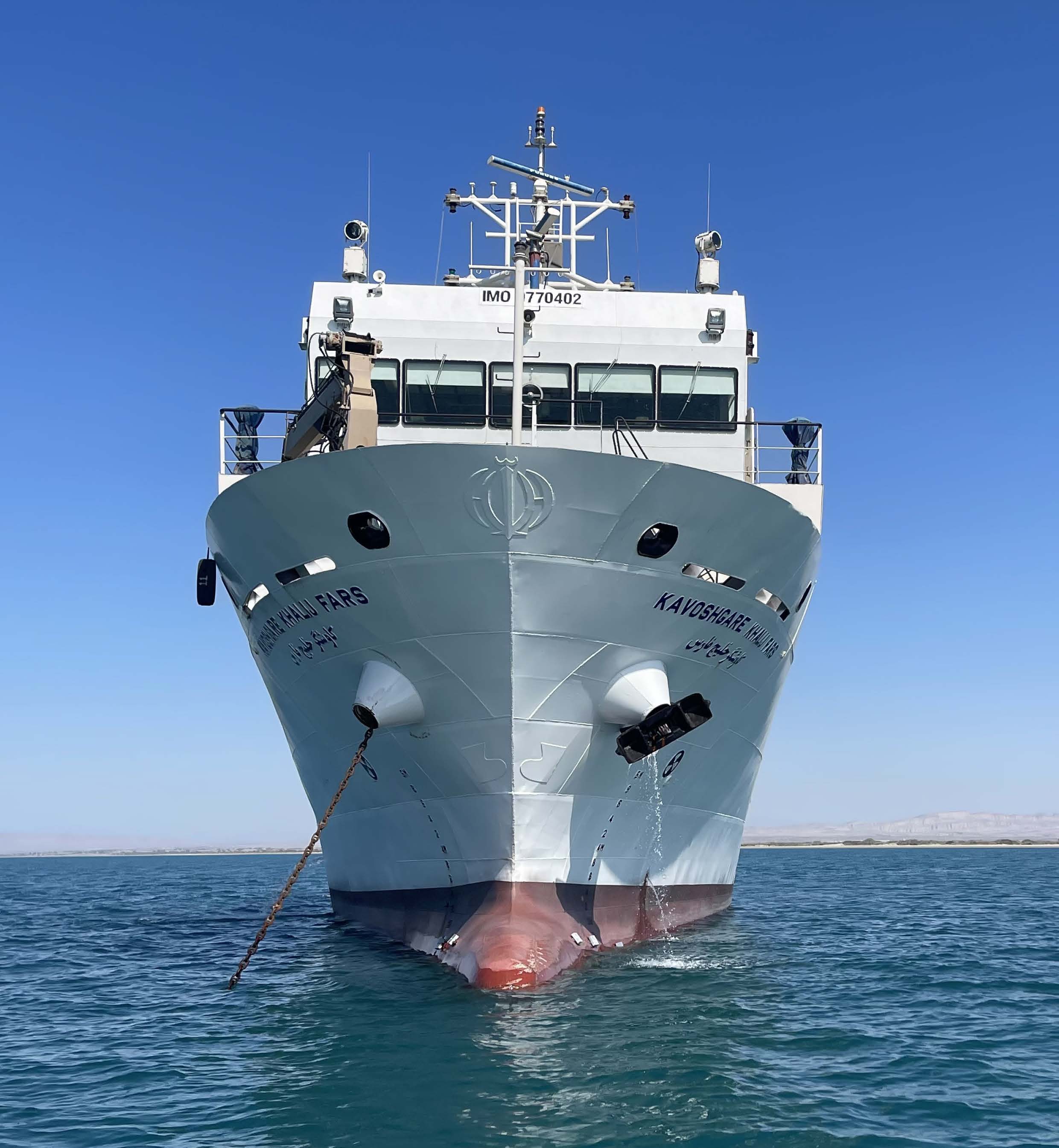
Ocean-Going Research Vessel
A platform for conducting oceanographic and atmospheric research, marine environmental monitoring, and advancing the country's marine science capabilities.
A National Platform for Marine Research
The ocean-going research vessel is one of the country's key research infrastructures, enabling scientific missions in coastal, offshore, and oceanic waters.
Equipped with specialized sampling, monitoring, and measurement systems, the vessel provides a platform for interdisciplinary research in marine and atmospheric sciences.
Construction History
The research vessel "Kavoshgar-e Khalij Fars" was proposed by the Iranian National Institute for Oceanography and Atmospheric Science in 2008 in response to the country's need for a specialized oceanographic research vessel. Construction began in May 2011 at Shahid Darvishi Marine Industries and was completed after four years, with approximately 40 percent foreign-exchange savings and a construction cost of 270 billion Iranian rials. The vessel was launched in Bandar Abbas on February 15, 2017 and subsequently delivered to the institute.
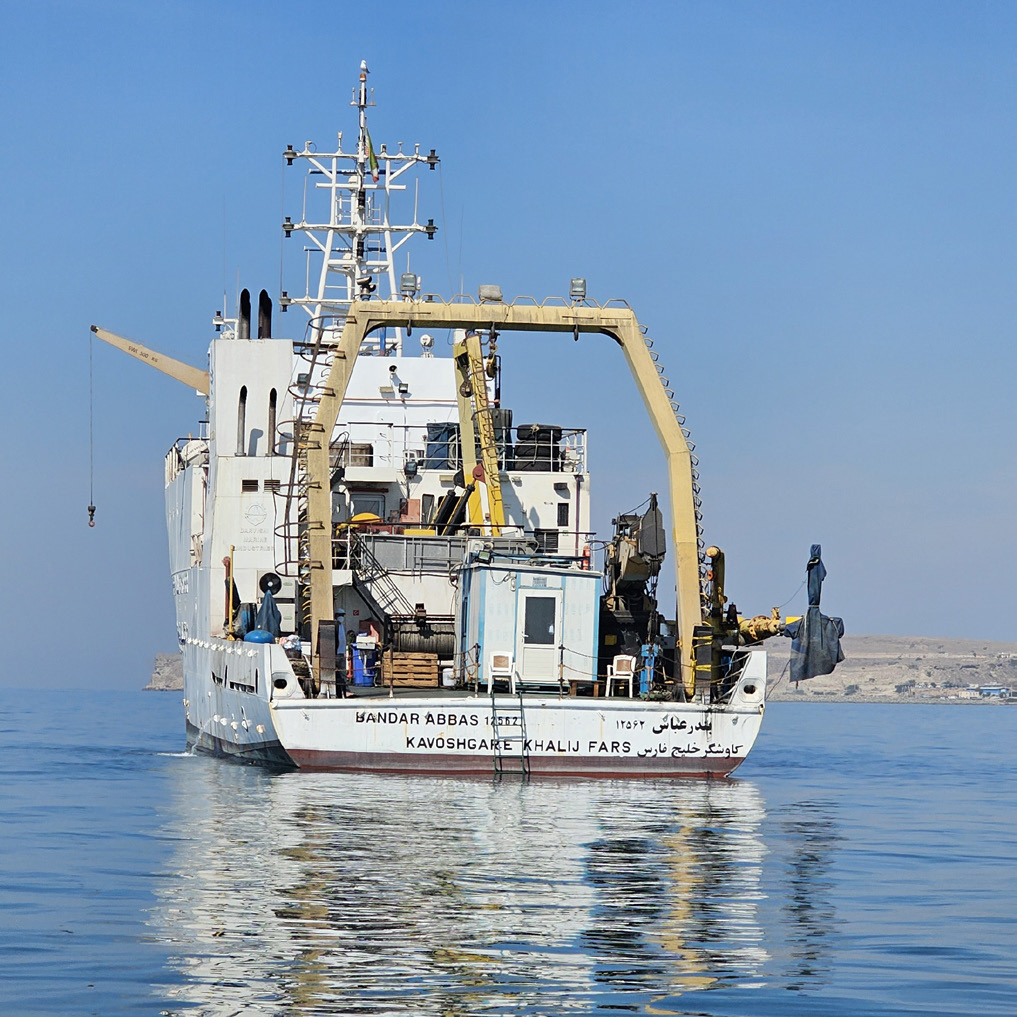
Vessel Specifications
98
10
4.5
555
2
1,030
15
3,000
2
27
3,000
2
Satellite Communication Systems
Advanced Propulsion System (CPP)
Data Transmission and Dynamic Positioning (DP) Systems
Research Fields
Supporting marine and atmospheric studies in coastal, offshore, and oceanic waters.
Physical Oceanography
Marine Chemistry
Marine Biology
Marine Geology
Marine Surveying
Marine Meteorology
Research Vessel Instrumentation
A range of specialized equipment for the collection, monitoring, and analysis of oceanographic, atmospheric, and biological data.
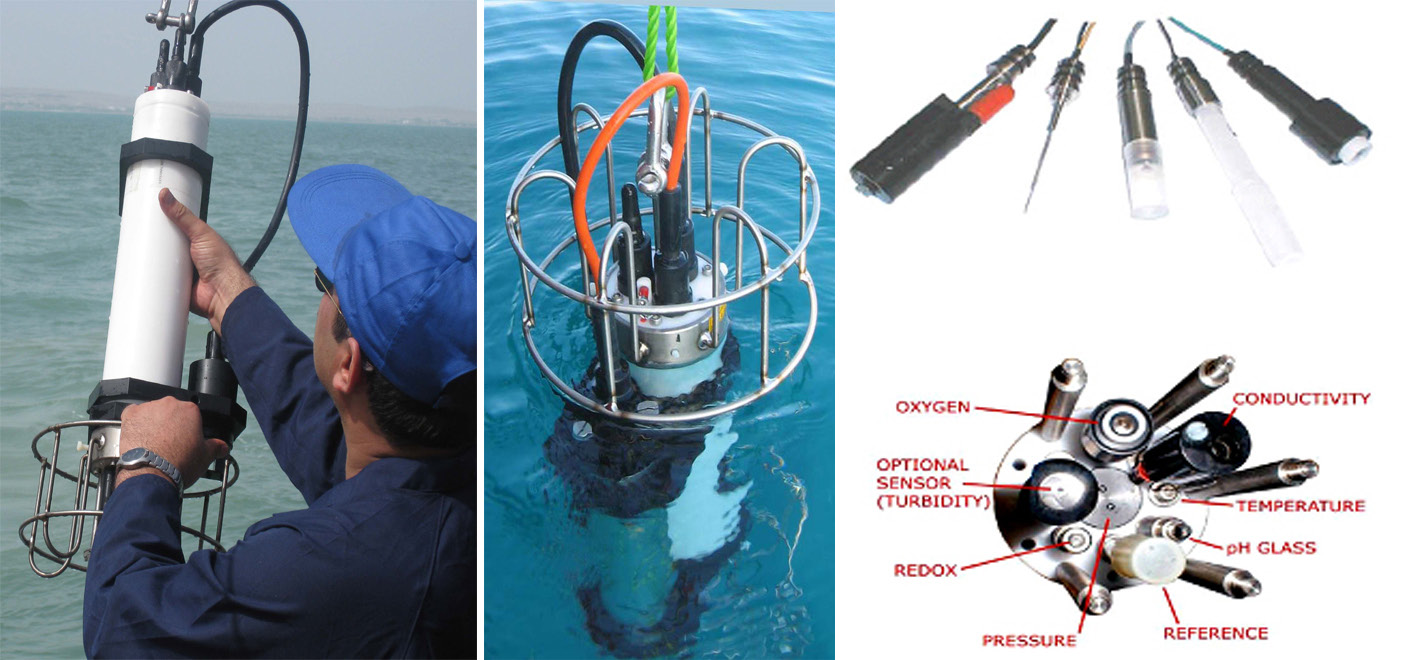
- Types: Ocean Seven 316, 316 Plus, Sea Sun Tech 75M
- Ocean Seven 316
- Maximum operational depth: 200, 1500 & 4000 m
- Sensors: Temperature, Conductivity, Pressure, Oxygen, pH, Turbidity, Fluorometer
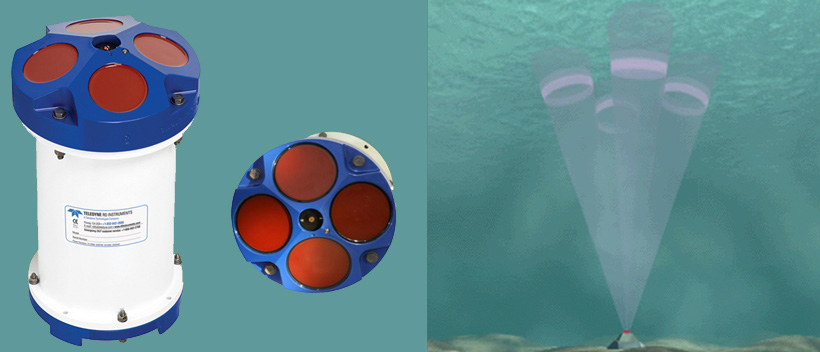
- Acoustic Doppler Current Profiler
- RD Instruments, USA
- Teledyne WorkHorse-Sentinel, 600 kHz
- Equipped with bottom track
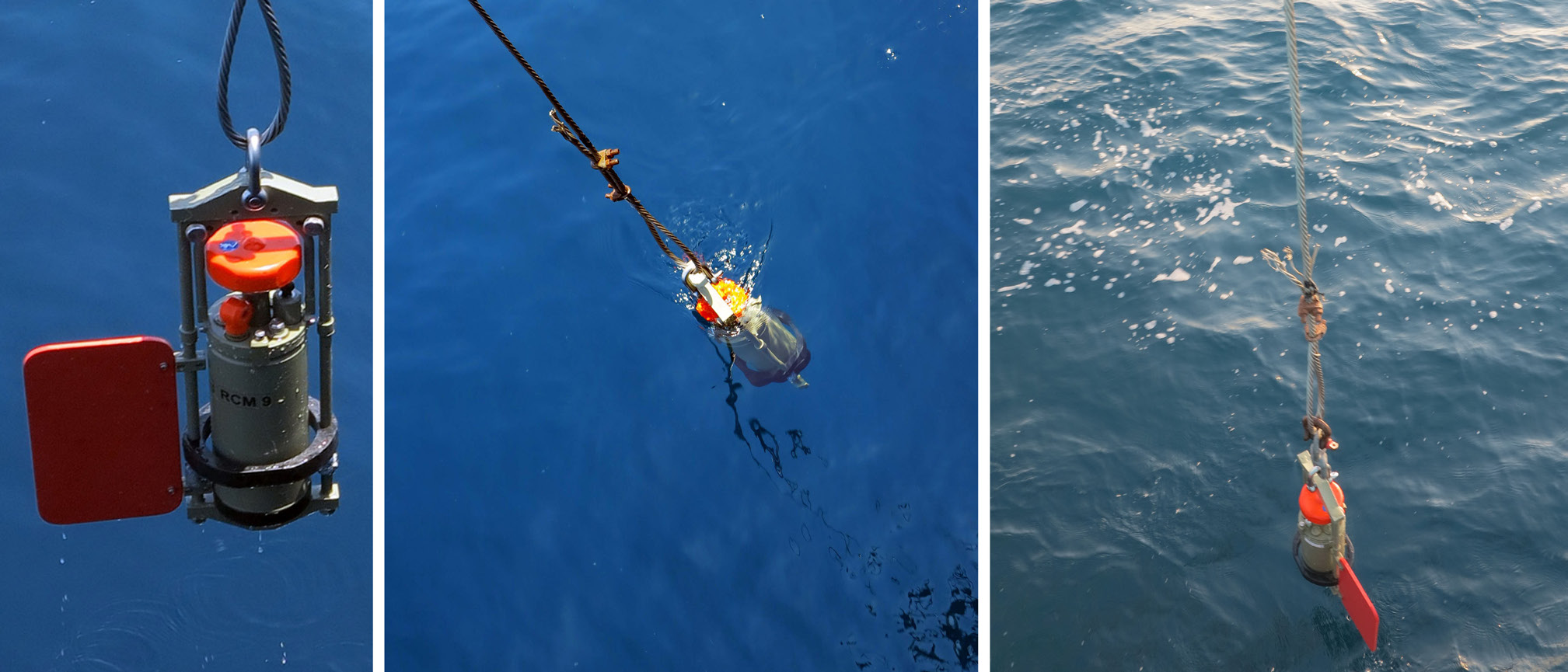
- Recording Current Meter
- AANDERAA, Norway
- RCM-9, MK II
- Optional Sensors: Temperature, Conductivity, Pressure
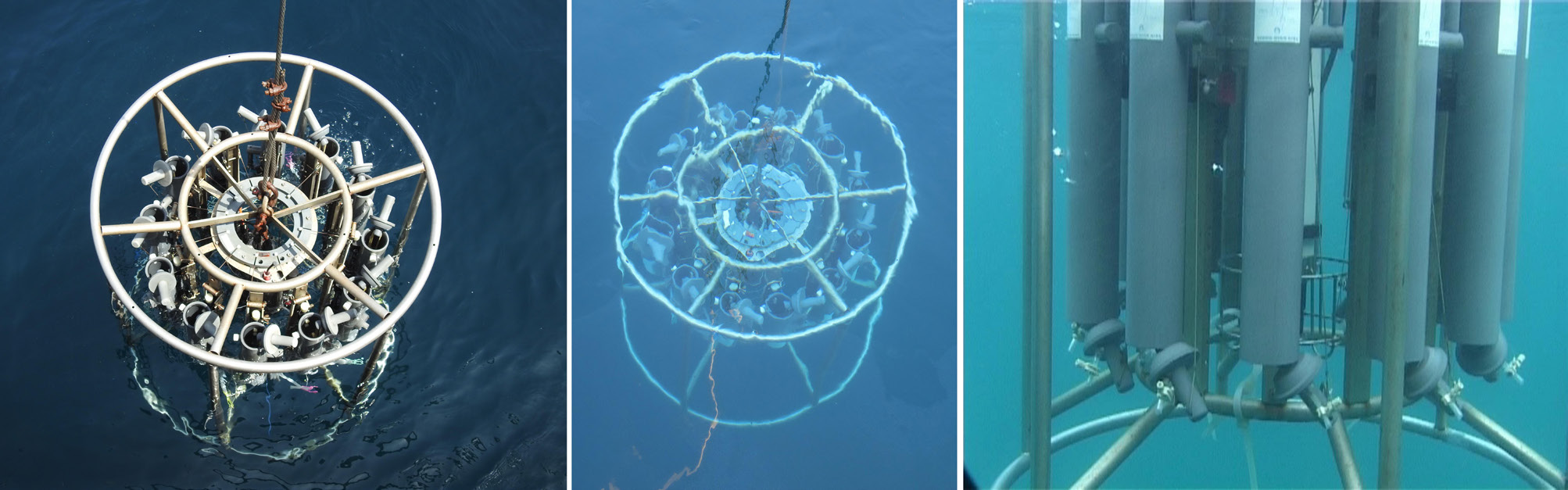
- Hydro-Bios, Germany
- Equipped with 12 bottles
- Capacity: 1.7 to 10 liters
- Maximum operational depth: 3000 m
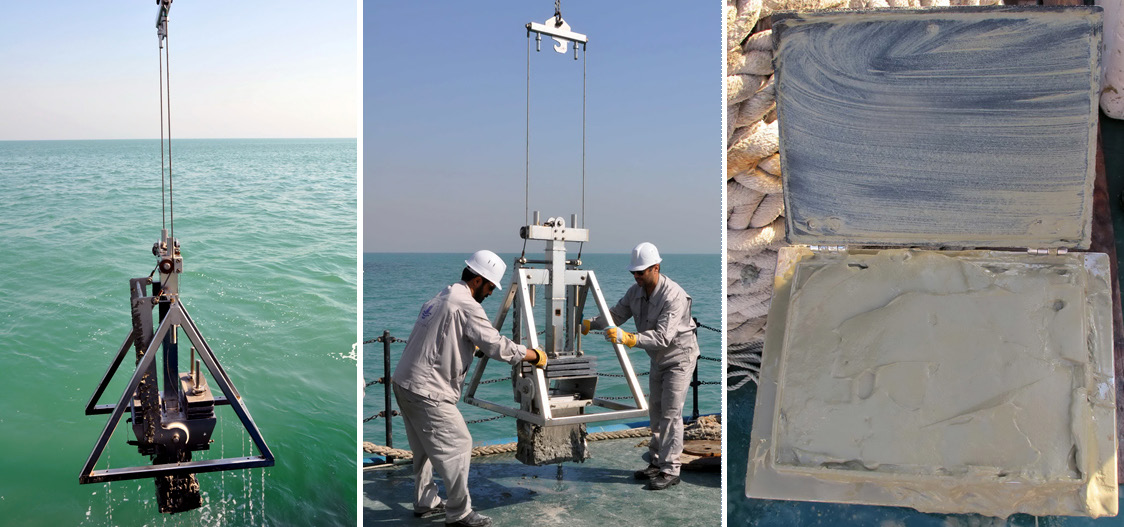
- KC, Denmark
- Model: 80.100-50
- Bottom penetration: 50 cm
- Sediment sample volume: 1000 cm³
- Weight of device: 540 kg
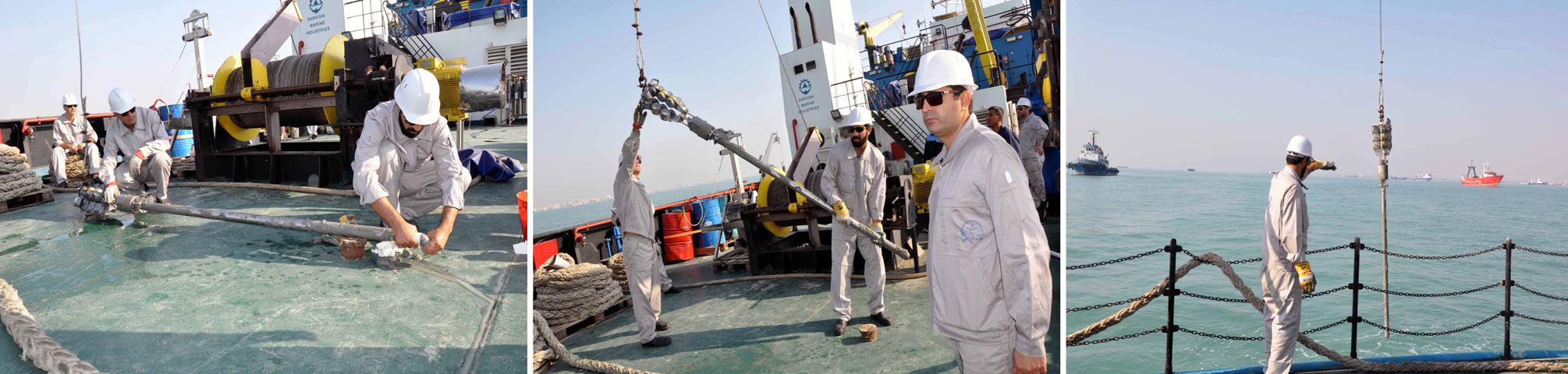
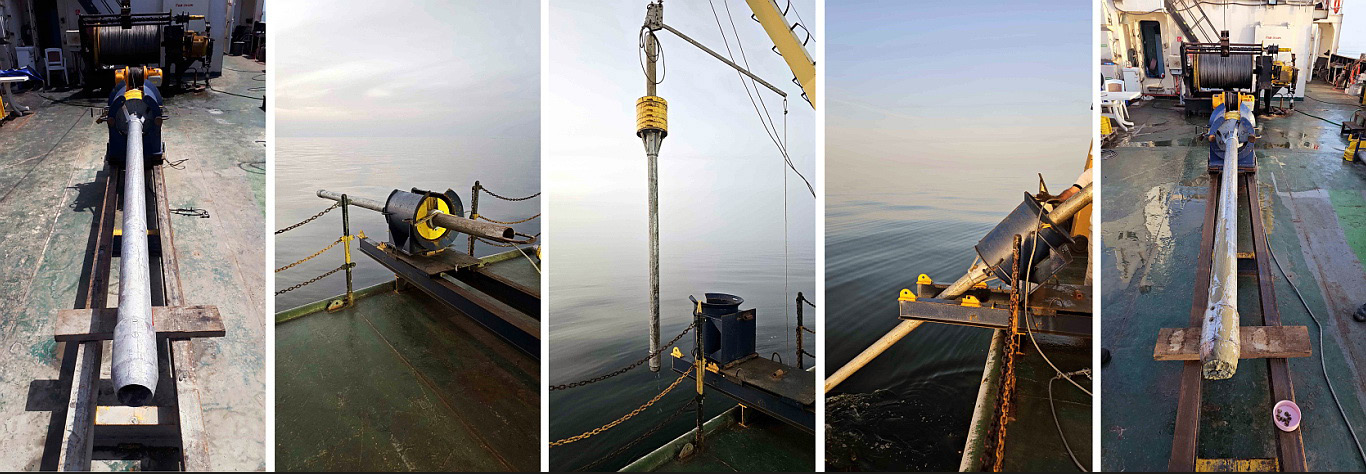
- KC, Denmark
- Model: 13.570
- Sample tube length: 1 to 6 meters
- Weight of device: 86 kg
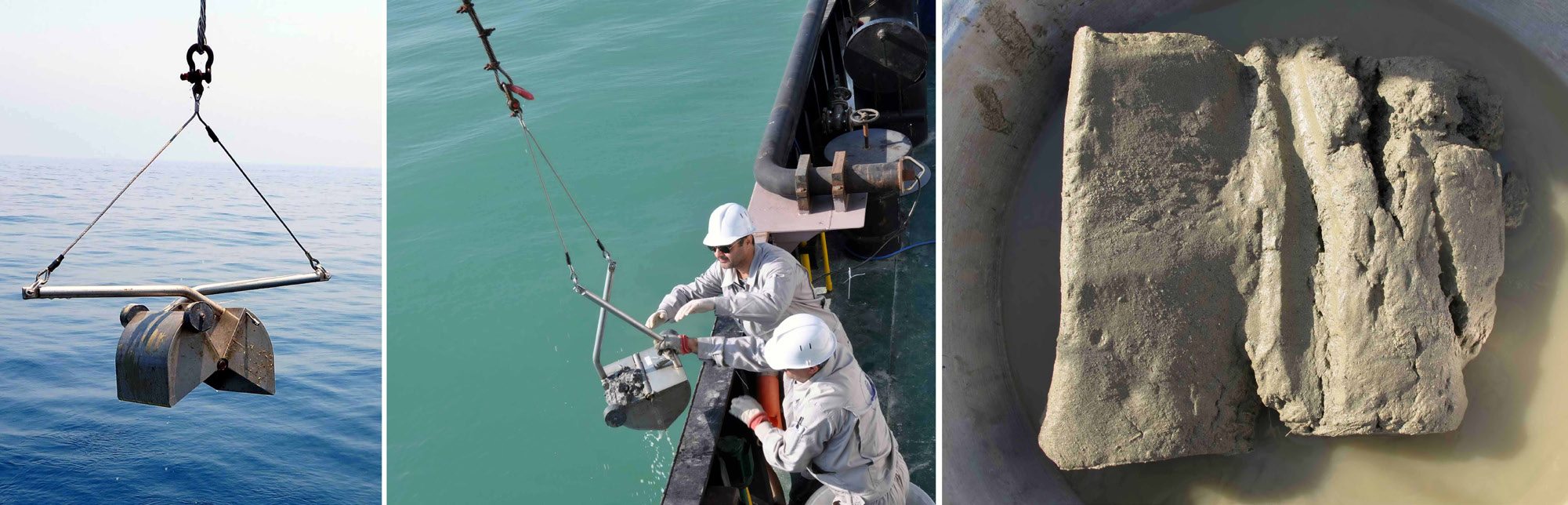
- OSK, Japan
- Model: Type 2 (diameters: 110 & 60 mm)
- Barrel length: 280 & 200 cm
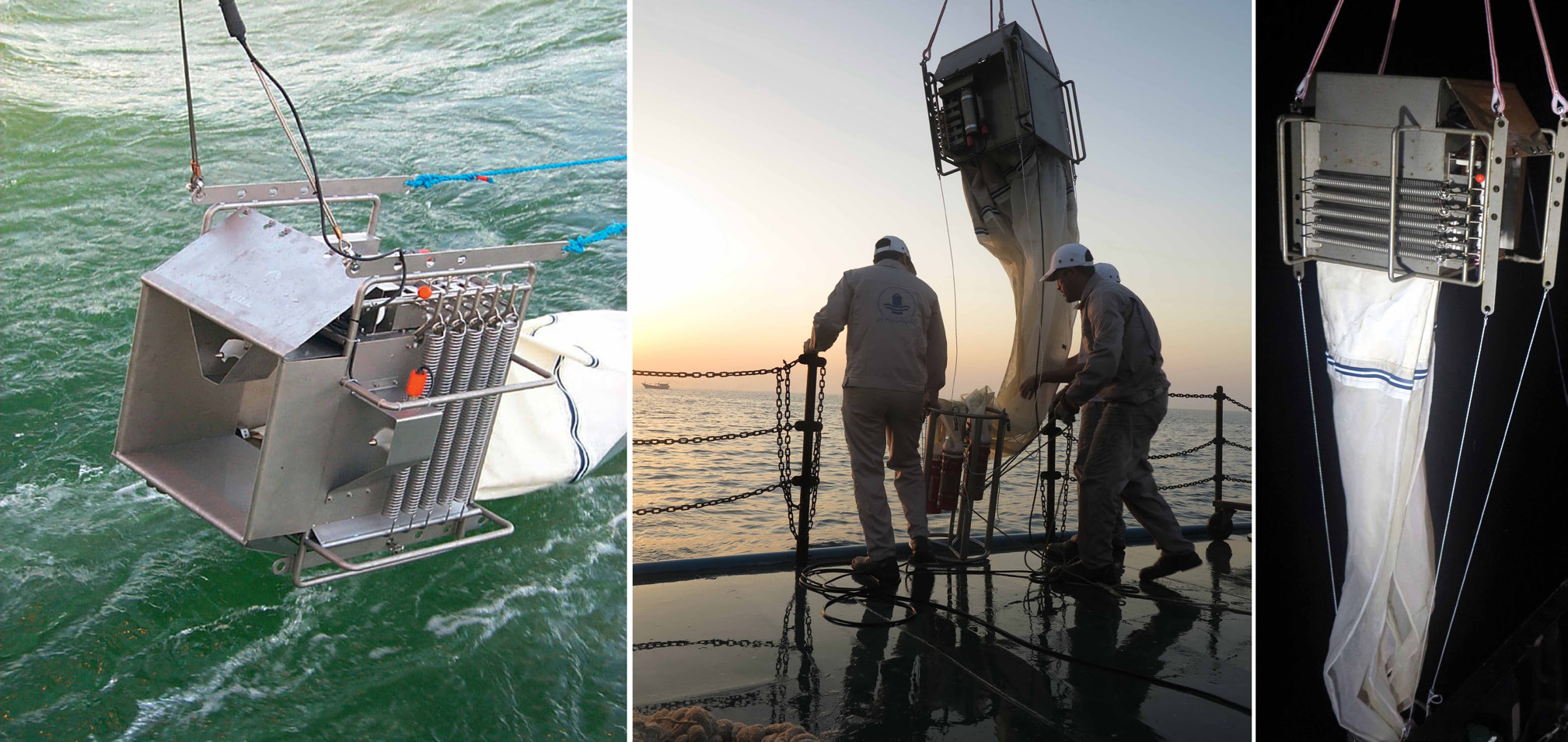
- Hydro-Bios, Germany
- Model: Van Veen
- Grasping area: 1000 cm²
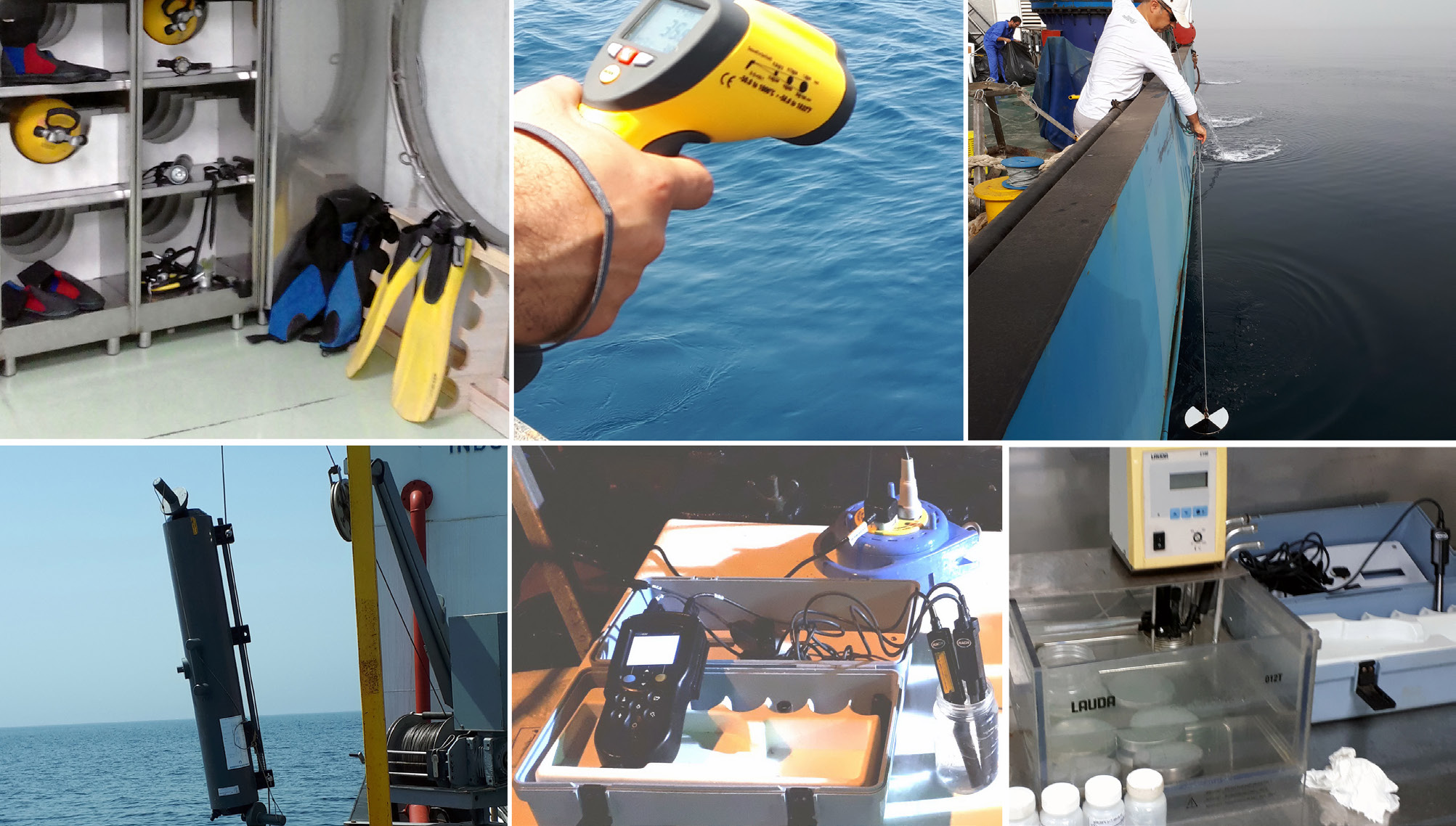
- Hydro-Bios, Germany
- Equipped with 5 nets
- Net mesh size: 100 to 500 μm
- Maximum operational depth: 3000 m
- Diving Equipment
- Laser Thermometer
- Secchi Disk
- Niskin Bottle
- Multi-meter
- pH Measuring Device
Scientific Missions of Kavoshgar-e Khalij Fars
Selected oceanographic, environmental, and research cruises conducted by the research vessel in the Persian Gulf, Gulf of Oman, and Strait of Hormuz.
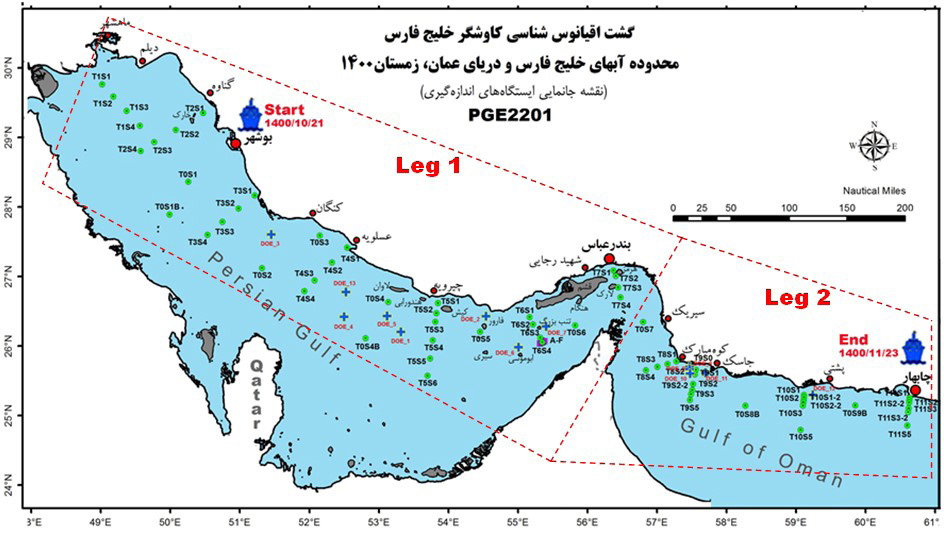
The Largest Oceanographic and Environmental Cruise in the History of the Country's Scientific Research
Marine Operation Costs
Cost figures updated for 2025
Fuel
Maintenance & Repairs
Transportation
Food & Catering
Equipment Insurance
Personnel Insurance
Personnel
Maintenance
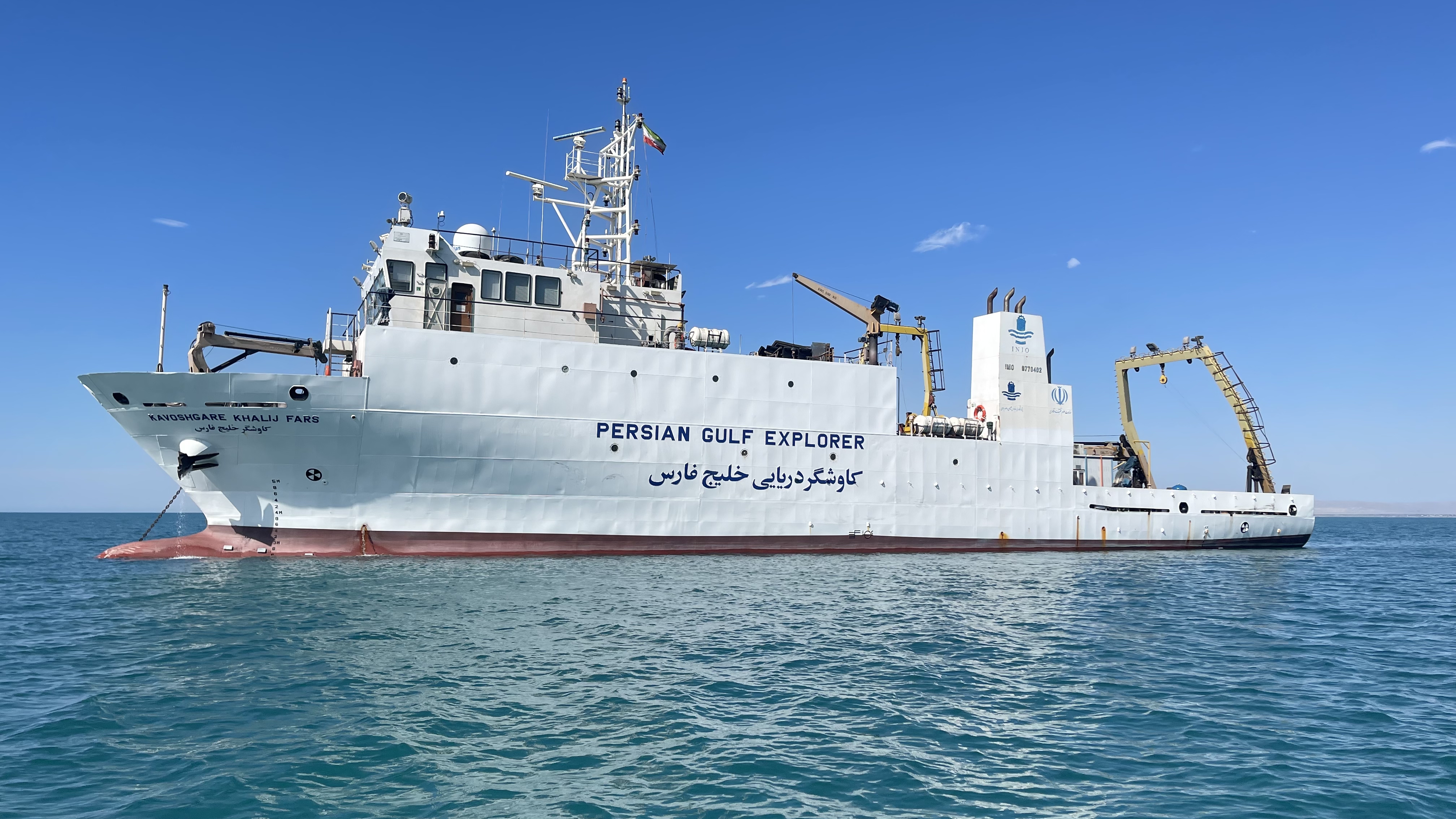
Kavoshgar-e Khalij Fars Research Vessel
The Kavoshgar-e Khalij Fars research vessel is one of the country's key national infrastructures for marine research. It provides the capability to conduct field studies in oceanography, atmospheric sciences, marine environmental studies, and marine ecosystem monitoring, and plays an important role in advancing marine science in Iran.