Dr. Hossein Farjami in a conversation with IRNA; If we don't have a base in Antarctica, we will be consumers of other people's research
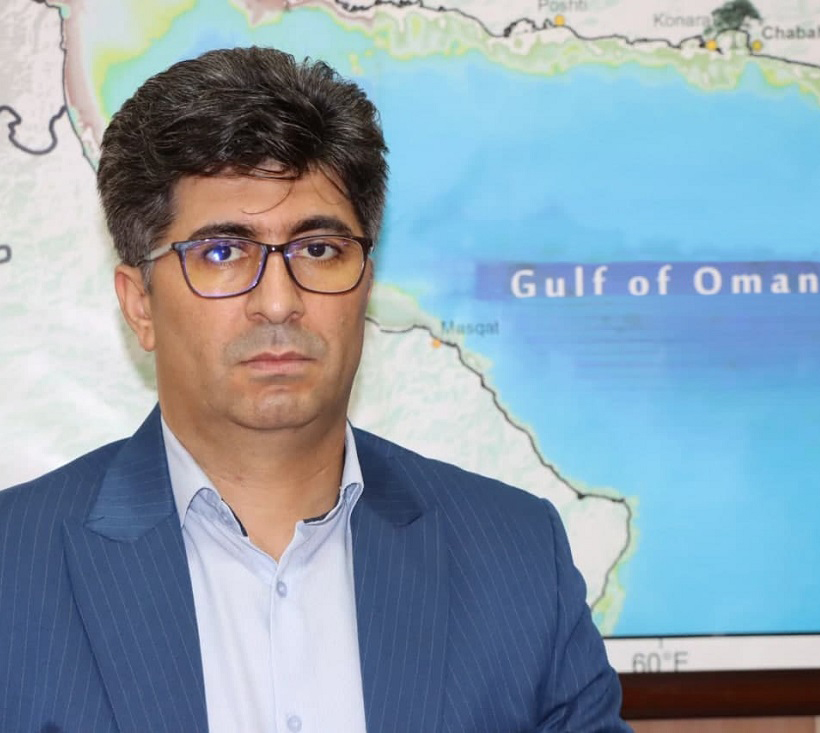
Member of the scientific faculty of the Research Institute of Oceanography and Atmospheric Sciences:
If we don't have a base in Antarctica, we will be consumers of other people's research
The head of the National Antarctic Research Center of the National Research Institute of Oceanography and Atmospheric Sciences said: The establishment of a research station in Antarctica and scientific activity in it requires the cooperation of all relevant institutions, and if we do not act in this field, we will become observers and consumers of other people's research in the future.
According to the public relations report of the National Institute of Oceanography and Atmospheric Sciences and quoted by IRNA news agency, Antarctica is the coldest, highest, farthest and most unknown continent in the world, with an area of 13 million square kilometers and the fifth largest continent in the world. Almost the entire continent is covered with ice. The continent of Antarctica, which has been discovered for 200 years, contains 90% of the world's fresh water, which is stored in the ice layer.
The real value of Antarctica for humanity should be found in the scientific discoveries under the ice surface of this continent. While Antarctica has gradually become the center of world attention because of its mineral resources and oil reserves, climate changes in this continent, in addition to the global warming of the seas and the atmosphere around it, which accelerates the melting of ice and the rise of sea levels, increases the absorption of carbon dioxide by the Southern Ocean and endangers the survival of marine life in the region and disrupts the food cycle of animals. Therefore, discovering the secrets of Antarctica is now more vital than before. Now more than 70 bases belonging to 31 countries are engaged in peaceful scientific research in the Antarctic continent.
Admiral Shahram Irani, the commander of the Islamic Republic of Iran's Navy recently said in a TV program: We have property in the South Pole and the plan is to raise the Iranian flag there and build a permanent base for joint military and scientific work.
This issue and issues related to Antarctica made us talk to Dr. Hossein Farjami, a member of the academic staff and head of the National Antarctic Research Center at the National Research Institute of Oceanography and Atmospheric Sciences, to explain and explain the scientific issues of Antarctica.
While explaining the geographical and climatic coordinates of the Antarctic region, Farjami explains that there are now 70 bases belonging to 31 countries in this region for various studies and researches. Some of our neighboring countries also have bases in this region or use the bases of other countries. He also listed Iran's actions in Antarctic research and pointed to Iran's membership in the Scientific Committee for Antarctic Research in 2013, regarding the establishment of a research station in Antarctica and scientific activity, he believes that the establishment of such a base in that place requires the cooperation and support of all related institutions so that while examining legal and international issues, it can act in those special conditions by observing all the existing protocols (instructions) in this field. The Antarctic Guidelines are a set of international laws and agreements that aim to protect the environment and scientific interests of the Antarctic continent.
Where is the South Pole and what are its geographical and climatic characteristics? Explain about the extent, natural and God-given resources, importance and value of the Antarctic continent?
From a legal point of view, according to the Antarctic Treaty approved in 1959, Antarctica refers to the geographical area below the 60 degree orbit of the southern hemisphere of the earth. But from a geophysical point of view, its border is considered to be in a narrow belt where the less salty and cold waters of the Southern Ocean meet with the warmer and saltier waters of the North.
The continent of Antarctica is the fifth largest continent on the planet, with an area of about 13 million square kilometers. For comparison, it can be said that this continent has a larger area than the entire continent of Europe. Therefore, we are dealing with a large area of the planet where about 90% of the world's fresh water is located in its ice sheets (which sometimes reach 4 km). Compared to other continents, this continent is the coldest continent with a recorded temperature of -89 degrees Celsius, the highest with an average altitude of 1800 meters, the driest with an average rainfall of 50 mm per year, the windiest with a recorded speed of 300 km per hour, the most animal diversity in the sea and the most unknown continent on the planet.
Antarctica is rich in natural and God-given resources; Among them are marine food resources, fossil resources and precious stones. According to the Antarctic Treaty, no country has the right to explore and exploit these resources at the moment. This isolated continent has high scientific, environmental, cultural and strategic importance. The continent of Antarctica is a large natural laboratory where huge scientific and peaceful researches are carried out in various scientific fields such as meteorology, oceanography, geology, astronomy and space research, biology and medical sciences. In terms of geophysics, Antarctica is the beating heart and balancer of the earth's temperature and provides the conditions for living organisms and plants on it. Also, this continent is a shelter of unique wildlife and valuable genetic resources, which has attracted the attention of many scientists and enthusiasts from all over the world.
So far, how many countries have built a research base in the South Pole and what activities are they doing? Iran has or wants to cooperate with which of them?
Many countries made significant investments for peaceful research in this part of the world and made extensive plans for the present and future of this research. Also, there are various permanent and seasonal stations in this area, and some countries like Malaysia use rented and sometimes shared stations as needed.
According to the Antarctic Research Database, there are currently more than 70 research stations belonging to 31 countries in Antarctica, distributed across the continent. In addition, there are temporary field camps that support specific projects. These countries include Finland, America, Poland, Uruguay, Chile, Argentina, Russia, Germany, India, Australia, Brazil, France, Italy, Japan, England, Spain, China, South Korea, Pakistan, Romania, Peru, Ecuador, Czech Republic, Belgium, South Africa, New Zealand, Sweden, Norway and Ukraine. Regarding the cooperation of the Islamic Republic of Iran with other countries, the National Institute of Oceanography and Atmospheric Sciences has been able to send a researcher to Antarctica with the cooperation of India, and currently, in the field of modeling of atmospheric and oceanic phenomena, a research plan is being implemented with the International Center for Environment and Remote Sensing, Nansen, Russia.

Dr. Farjami's photo
When did the need to establish an oceanographic research base in Antarctica begin and what course did it follow?
The guardian of the presence of the Islamic Republic of Iran in Antarctica is the National Research Institute of Oceanography and Atmospheric Sciences, where the National Antarctic Research Center was established in 2012. From an atmospheric and oceanic perspective we are dealing with an integrated land and air system of the entire planet. Any phenomenon in any part of the earth, even if it is very little, is affected by different phenomena of the earth (butterfly effect). Therefore, in large-scale studies, we need to have atmospheric and ocean information and data from all parts of the planet.
Based on their research and international cooperation, the researchers of the research center considered the necessity of research in the Antarctic and made many efforts for the participation of the Islamic Republic of Iran in the scientific fields of this region. After the establishment of the National Antarctic Center, with the formation of the Antarctic Steering Committee by the order of the Minister of Science, Research and Technology consisting of professors from universities, research centers and the National Research Institute of Oceanography and Atmospheric Sciences in 2013, Iran succeeded in becoming a member of the Scientific Committee for Antarctic Research and the research institute started initial studies in the field of Antarctica in the form of research plans and technical reports in the fields of legal, economic, environmental features and activity in Antarctica and then presented the necessity and solutions for Iran's presence in Antarctica to the decision-making bodies.
The necessity of support for Iran's accession to the Antarctic Treaty
The research institute pursued the plan of Iran joining the Antarctic Treaty through the Ministry of Science, Research and Technology, and as a result, the scientific presence and establishment of research bases of the Islamic Republic of Iran in the Antarctic was included in the country's fifth development program by the Supreme Council of Marine Industries of the country; But so far there has been no support in this regard. The National Antarctic Research Center works with some universities and research centers in the field of Antarctica with regard to available data and facilities such as satellite data and information, numerical modeling. Also, every year, various national and international workshops and meetings in the field of Antarctica are held in the National Institute of Oceanography and Atmospheric Sciences with the presence of domestic and foreign professors active in this field from countries such as Australia, Malaysia, France, Italy and New Zealand.
Currently, a joint study project with the Nansen International Center for Environment and Remote Sensing of Russia in the field of oceanic atmospheric phenomena is being conducted under my supervision. We are also in the process of launching a numerical prediction system for Antarctic polar low pressures at the National Research Institute of Oceanography and Atmospheric Sciences. Mohammad Reza Shokri, a member of the faculty of Shahid Beheshti University and a former member of the research institute, went to Antarctica with Indian researchers and wrote the result of this experience in a book called Journey to Antarctica, Ice Continent. Please tell me about this.
Dr. Shokri is the first Iranian who was able to travel to Antarctica as a researcher in 1377 and investigate the important and complex topic of research in Antarctica and its mechanisms. While carrying out a joint Iran-India research project in the Antarctic, he recounts the difficult and fascinating events of his trip to Antarctica and his scientific research in this trip with simple and readable language and attractive images. In this book, he describes in detail and structured the geography of the fifth continent on the planet, its plants and animals and the surrounding seas, the organization process and the costs of establishing a research base in Antarctica, and such trips and events due to harsh atmospheric and oceanic conditions during this trip, and examines the example of Maitri Research Base in India. Finally, the author of the book, while presenting the results of his research in this trip, raises the position of Iran in Antarctic exploration. It can be said that this book is a useful and lasting resource about the technical and operational aspects of research in the White Continent in Persian language.
Before Dr. Shokri, no other Iranian has traveled to Antarctica on behalf of Iran, various Iranian people have traveled to Antarctica from Iran with the purpose of tourism, space observation and documentation, but only Dr. Shokri was sent to Antarctica with the financial support of the country in 1377 from the National Research Institute of Oceanography and Atmospheric Sciences with a research group from India for research purposes.
Antarctica is a suitable place to study meteorites and stargazing
Antarctic bases are active in the fields of oceanography, atmospheric physics, meteorology, climate change, astronomy, glaciology and biology.
Antarctica is a large and virgin continent that has special and unique conditions. This continent can be a suitable field for conducting scientific research in various fields for the country's scientists and researchers. Antarctica has biodiversity with special features that include wildlife, plants, fungi, bacteria and viruses. This biodiversity can be a valuable resource for the study of evolution, biology, physiology, genetics and biotechnology.
This continent plays an important role in the world's climate balance and prevents global warming. It is also the place of formation of many meteorological phenomena such as storms, pressure systems, atmospheric currents and temperature changes. The study of these phenomena can be used for the detailed study of climate changes, increasing the accuracy of climate, atmospheric and oceanic forecasts. This continent has a complex and attractive geological structure, the knowledge of which can be an answer to various scientific challenges in the field of earth history, polar rotation, earth plate movements, etc.
Antarctica is almost covered by a thick ice sheet. This ice sheet can be used to study ice behavior, sea level changes, water cycle, carbon storage and climate history. This continent is surrounded by the Southern Ocean, which is one of the world's five oceans. This ocean has special and different conditions such as temperature, salinity, sea currents and biodiversity. This ocean can be used to study the atmospheric and oceanic cycles of the earth, heat transfer, carbon cycle, detection of food chains and water resources. Antarctica is a suitable place for studying meteorites, observing stars and planets, because it has long nights, clear and dark skies, dry and stable air, and little optical and radio interference. In this continent, various telescopes and detectors have been installed to study visible light, radio waves, gamma rays, cosmic rays and gravitational waves. Data and information from these telescopes and detectors can be used to investigate the structure and history of galaxies, stars, black holes, dark matter and dark energy. These are part of the scientific and environmental uses of Antarctica, and there are definitely areas that have not been mentioned.
 |
Pakistan, the owner of the base, Türkiye and the UAE on the way to Antarctica
Which of the neighboring countries has a station in Antarctica?
Among our neighboring countries, only Pakistan in this continent, a station called Jinnah (Jinnah Antarctic Station) has Also, from the neighboring countries, Turkey started its research in the field of Antarctica almost at the same time as Iran, and annually sends researchers to this continent with the help of other countries in various scientific fields, and considering the short time, it has done significant research in this field. The Persian Gulf countries are also trying to enter scientific and peaceful studies in this virgin continent. Research in Antarctica needs the serious support of officials and the cooperation of experts and the help of the country's research and academic community. Not much can be done with only one research institute or one research center in this continent.
I invite all professors and capable students inside and outside the country to help us in this way. The National Research Institute of Oceanography and Atmospheric Sciences has made big plans in the field of Antarctica. The scientists and professors of the research institute were the first ones in the country who realized the importance of studying the Antarctic continent and raised it at the national level. Now, based on this grand strategy, the National Antarctic Research Center is thinking of expanding its atmospheric and oceanic studies in this region of the globe and expanding scientific communication and expert exchange with leading countries in this field.
What is the benefit of establishing a permanent research base in Antarctica for the country's scientific reputation?
Research in Antarctica is moving at the edges of knowledge and reaching the scientific poles in the world. In terms of meteorological and oceanic aspects, the Antarctic region has extreme conditions. Therefore, the presence and activity there requires the most advanced human technologies in various scientific and operational fields in order to be able to perform scientific research in this area. Therefore, by being in this region, our country can show off its scientific capabilities to the world.
Antarctic research guidelines must be followed
How was the research institute's correspondence with officials and high-level decision makers for the establishment of the Antarctic research station?
National Research Institute of Oceanography and Atmospheric Sciences, after the formation of the Steering Committee of Antarctica by the order of the then Minister of Science, Research and Technology, conducted extensive initial studies of the legal, economic, environmental characteristics and activities of research stations in Antarctica and sent and discussed the plan to establish a station in Antarctica to the country's decision-making institutions, including the Strategic Council of Foreign Relations, the Expediency Council, the Islamic Council, the Ministry of Foreign Affairs, the Ministry of Science, Research and Technology, etc. Also, a preliminary review of the necessity and solutions for Iran's presence in the Antarctic has been sent and followed up with the Strategic Council of Foreign Relations, the Economic Commission and the Scientific and Cultural Commission of the Islamic Council.
Where did Iran's plan to join the Antarctic Treaty through the Ministry of Science lead? What measures and coordination have been done with the authorities in this regard?
The establishment of a research station in Antarctica and scientific activity in it requires the cooperation and support of all relevant institutions so that, while examining legal and international issues, it is possible to act in those special conditions by observing all the existing protocols (instructions) in this field. The Antarctic Guidelines are a set of international laws and agreements that aim to protect the environment and scientific interests of the Antarctic continent. These guidelines were compiled based on the Antarctic Treaty or the Antarctic Treaty, signed by 13 countries in 1959 and implemented in 1961. This agreement defines Antarctica as a zone of peace and science and prohibits any military activity or extraction of natural resources in it. According to the directives for environmental protection and the directives for the protection of Antarctic wildlife, any killing, catching, moving or abuse of animals is prohibited, and it has also determined the requirements and regulations for the protection of sensitive and special areas. It has also prohibited any activity of extracting underground resources for at least 50 years from the date of approval.
Tell me about publishing and media activities in this field?
The colleagues of the scientific staff of the National Research Institute of Oceanography and Atmospheric Sciences have carried out justification plans for the presence in Antarctica and projects in the field of presence and scientific activity in this continent and legal and environmental issues, and in this field they have also published articles in reputable scientific journals. Currently, we have articles on the atmospheric and oceanic phenomena of Antarctica under review in prestigious foreign journals, and we are also cooperating with the Institute of Geophysics of Tehran University and Khorramshahr University of Marine Sciences and Technologies in order to carry out a joint project and guide student theses in the master's and doctoral degrees in the field of Antarctica. Regarding the media topic, in order to introduce Antarctica, its potentials and capacities and the great opportunity to create a research base for Iran, many interviews, reports and news have been conducted with the media, including news agencies, press and radio.
What is the short, medium and long-term plan of the National Antarctic Research Center?
According to the organizational task, the academic staff members of the research institute approve and implement research projects in this field according to their needs, interest and expertise. But we are facing problems due to lack of support. If we really want to establish a research base of the Islamic Republic of Iran in Antarctica, we must have an active presence in international scientific meetings and conferences and present valuable scientific achievements in order to open a foothold in this virgin continent.
Do you have a suggestion or request for officials or decision-making bodies?
In order to progress in any field of research science, in addition to confirmation and verbal description, it is necessary to smooth the path of growth and progress. The world is competing and progressing at an incredible speed in all scientific fields that if we do not have a thought and plan in this field, in the not too distant future we will be nothing more than just observers and consumers. In the field of Antarctic research, there is no financial support. We request the officials and decision-making institutions to investigate the issue in this field so that a separate budget for Antarctic research is allocated so that the country's scientists and researchers can focus on research and technology development instead of engaging in trivial everyday jobs.