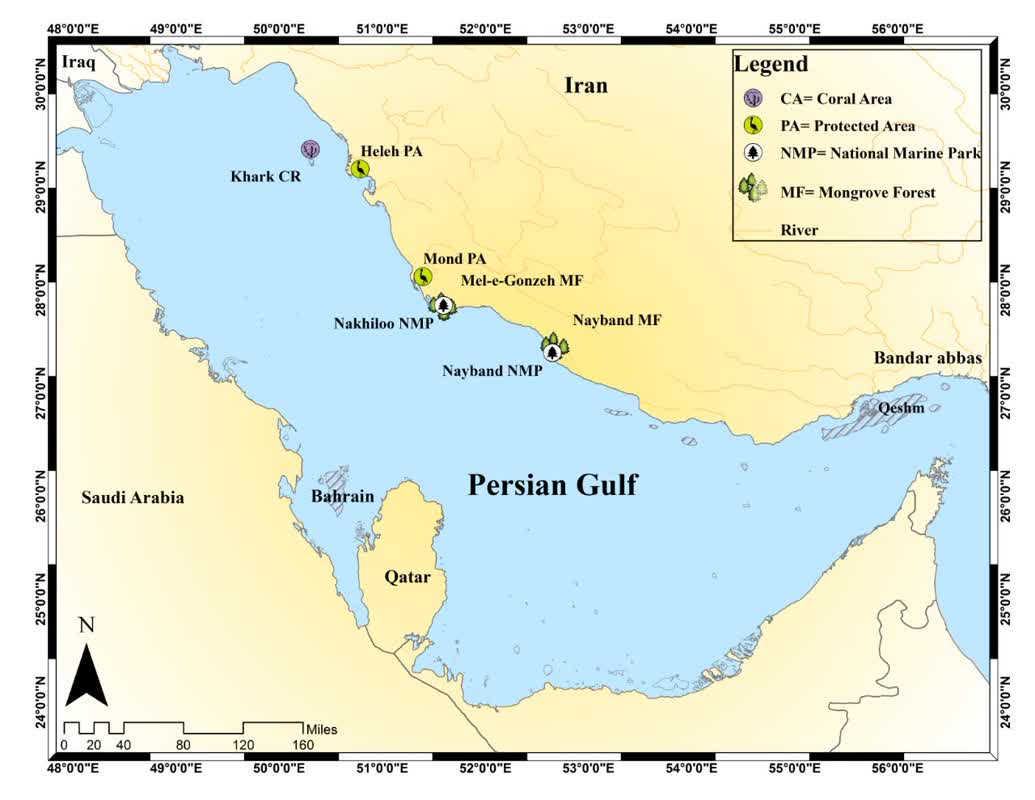
According to the research institute's public relations report, Dr. Maryam Ghaemi, a member of the scientific staff of the National Research Institute of Oceanography and Atmospheric Sciences, in an interview with ISNA, Regarding this research, he said: Marine protected areas (MPAs) are one of the policy tools for the protection of marine biodiversity and the sustainable use of marine resources. Various chemical pollutions are one of the known threats to protected areas.
Stating that most of the pollution entering these areas originates from land sources, he stated: Meanwhile, the protected areas located on the route of shipping lines or industrial and port facilities, cities and river mouths experience significant pollution.
Ghaemi reminded: Recent studies in some regions of the world have shown that these regions are threatened by toxic pollutants. Therefore, continuous monitoring of quality parameters and water and sediment pollution in marine protected areas is necessary in order to create basic ecological data and evaluate performance trends over time and ultimately effective policies.
Referring to the published article, the head of the Persian Gulf Oceanographic Station emphasized that this study is a comprehensive research in the field of investigating the distribution, identifying possible sources and evaluating the ecological risks of heavy metal and persistent organic pollutants (including polycyclic aromatic hydrocarbons (PAHs), total petroleum hydrocarbons (TPHs), polychlorinated biphenyls (PCBs)) in the sediments of the regions. Bushehr marine reserve includes "Mand" and "Hale" protected areas, "Nayband National Park" and "Nakhilo National Park".
He stated: The results of the investigations showed that the amount of some persistent organic pollutants in the sediments of the marine protected areas of Bushehr province is significant. The marine protected areas of "Mand" and "Hale" are among the threatened areas in terms of the investigated pollutants such as PAHs, TPHs and heavy metals.
Ghaemi added: Considering that these areas are the habitat of many migratory birds and aquaculture, agriculture and fishing activities are the main sources of livelihood of the local population, knowing the sources of pollution and continuous monitoring in order to prevent and reduce ecological threats and implement efficient policies to prevent pollutants from entering the water and sediments of these areas seems essential.
 |
According to him, based on the findings of this research, it can be concluded that protection plans and policies need to be revised to protect some protected marine areas of Bushehr province.
The scientific staff member of the Oceanographic Research Institute pointed out: The obtained results, which provide basic information about the amount of persistent organic pollution in sediments, can be used as an evaluation tool and a reference for future studies in protected areas.
He emphasized: In order to have a complete understanding of the situation and pressures on these marine areas, it is recommended to continue pollution monitoring programs in these environments. Such information will ultimately be useful for developing knowledge-based monitoring frameworks and evaluating the environmental effects of pollutants entering these areas.
According to ISNA, this article was published with the efforts of Dr. Maryam Ghaemi, a member of the National Research Institute of Oceanography and Atmospheric Sciences and with the collaboration of Farshid Soleimani and Sara Gholamipour, with the title "Profile of heavy metals and persistent organic pollutants in the sediments of marine protected areas: North of the Persian Gulf". This research was carried out with the material and spiritual support of the National Institute of Oceanography and Atmospheric Sciences of Iran and the National Environmental Fund of Iran (Project No. 9310/1020571).