The findings of the research institute researchers showed: the abundance of small plastics in the rivers of the north of the country
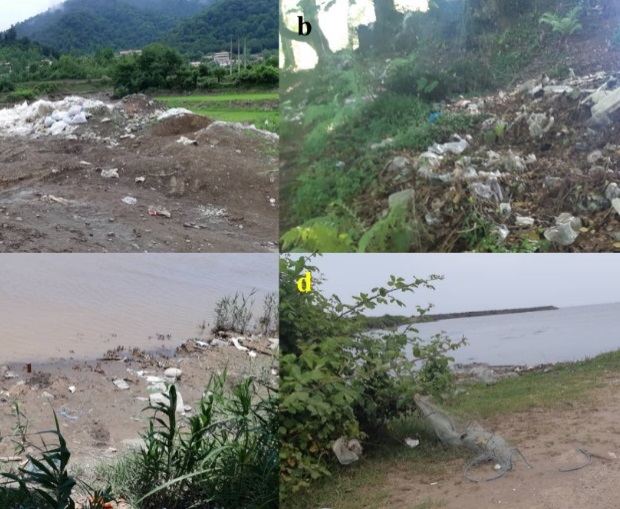
The findings of a number of studies by researchers of the National Research Institute of Oceanography and Atmospheric Sciences of Iran show that small plastics or microplastics were present in all the studied points of the rivers leading to the south of the Caspian Sea, and the abundance of these pollutants in the downstream is more than the upstream.
According to the research institute's public relations report and quoted by IRNA, microplastics or small plastics, as the most widespread marine waste, are small plastic particles with a diameter of less than 5 mm and have primary and secondary origins. Primary microplastics are produced in micrometer size; Such as ingredients used in personal care and cosmetic products.
Secondary microplastics are also produced by breaking down larger plastics. Microplastics can be classified into different categories based on shape, size, color, type of polymer and morphology. By increasing the microplastic surface, it is possible to absorb pollutants such as polycyclic aromatic hydrocarbons/ PAHs And medicinal substances increase on the hydrophobic surfaces of microplastics.
Humans always with fresh water environments; As related as rivers are, rivers also play an important role in transporting plastic to marine environments. It is estimated that 80 to 2.7 million tons of plastic enters the seas and oceans of the world through rivers.
Therefore, rivers carry about 80% of plastic waste into the world's oceans. Also, the accumulation of microplastics in river sediments leads to the formation of microplastic centers. These points are considered as a secondary source for river microplastics.
Although many studies have been conducted in recent years about microplastic pollution in coastal and offshore waters and sediments of the Caspian Sea, there are still many unknowns about microplastic pollution in the rivers leading to the south of the Caspian Sea.
It was previously shown that hydrodynamics, rivers, as well as tourism and fishing activities, are the most important sources of microplastics entering the southern waters of the Caspian Sea. However, little information is available on the possibility and extent of microplastic pollution in rivers leading to the Caspian Sea.
A group of researchers from the National Research Institute of Oceanography and Atmospheric Sciences of Iran, under the supervision of Dr. Ahmad Manbouhi, a member of the academic staff and head of the Caspian Sea Oceanographic Station (Nowshahr) and Dr. Ali Mehdinia, the research and educational assistant of the National Research Institute of Oceanography and Atmospheric Sciences, conducted an extensive research to show the existence, diversity and frequency of microplastic pollution in the rivers leading to the south of the Caspian Sea.
Based on this research, it was found that microplastics are present in all studied points in the rivers (upstream and downstream).
According to Mehdinia, the average concentration of microplastics in the studied points in two seasons of high water and low water was 1.406 microplastics per cubic meter and 0.4070 microplastics per cubic meter, respectively. Manbuhi also stated that the amount of microplastics in the downstream of the rivers is higher than in the upstream of the rivers and said: white and transparent polyethylene particles in the form of pieces and films and less than one millimeter in length were the most common microplastics in the waters of the rivers leading to the south of the Caspian Sea.
The results of this research showed that the average concentration of microplastics in the river water was 3.45 times higher in the period of high water than in the period of low water. Factors such as sewage and household waste, landfills and recreational-tourism activities, fishing and agriculture along the rivers, have caused an increase in the amount of microplastics in the downstream areas of the rivers.
These findings in the Journal of Environmental Science and Pollution Research Environmental Science and Pollution Researchhas been published, provides basic information on microplastics in the waters of rivers leading to the south of the Caspian Sea. However, to have an accurate profile of microplastics, annual monitoring and sampling is recommended.
 |
 |