Dr. Naderi in a conversation with ISNA: New findings of researchers that will rewrite the history of "Persian Gulf".
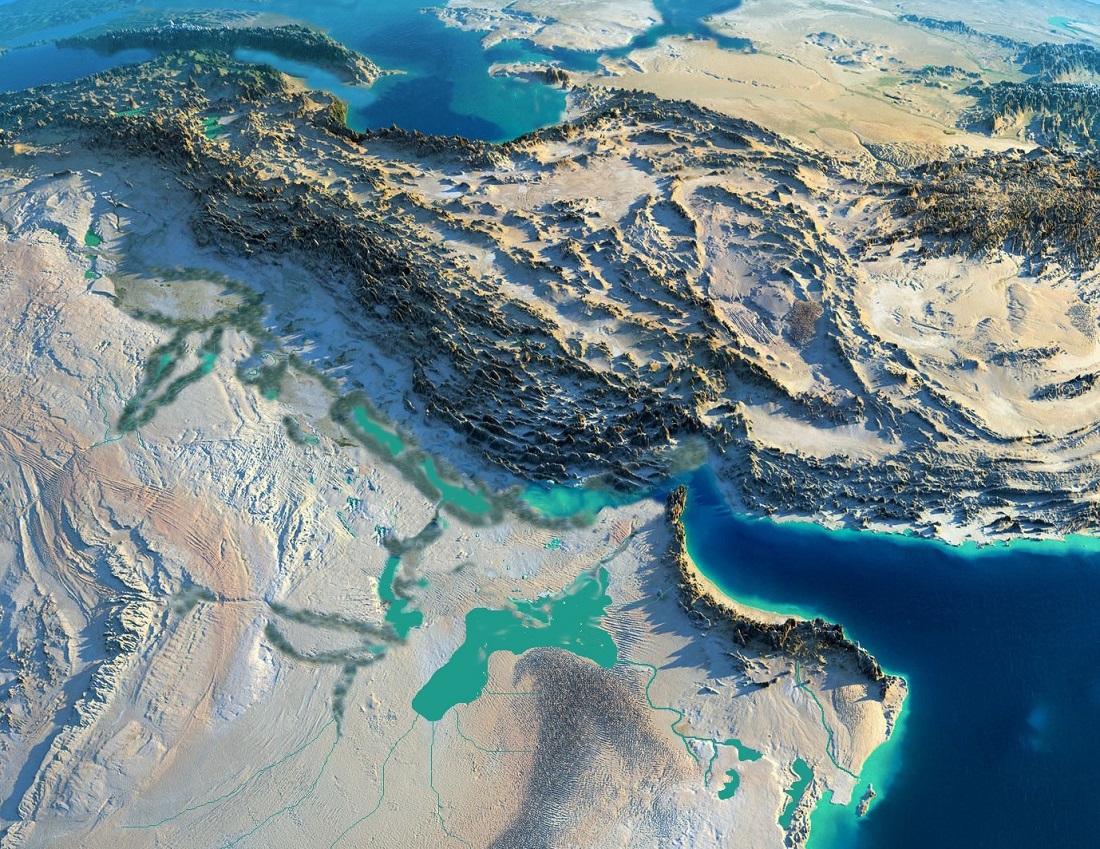
The new findings of the researchers that will rewrite the history of "Persian Gulf".
Recently, the researchers of the National Research Institute of Oceanography and Atmospheric Sciences, in collaboration with international researchers, conducted research on the paleontology of the "Persian Gulf", whose data indicates a huge flood in the Persian Gulf, and according to them, these findings can change our understanding of the history of the Persian Gulf and the ways in which climate change can affect the evolution of human civilization..
According to the research institute's public relations report and quoted by ISNA, in a detailed research, the scientists of the National Research Institute of Oceanography and Atmospheric Sciences and their international colleagues looked at the complex relationship between climate change, Sudden rise in sea level and the formation of the Persian Gulf with the formation of human history 10 They paid last thousand years. This study rewrites our understanding of the history of the region; Because its results show the impact of climate change with the evolution of human civilization.
Persian Gulf during the last ice age (ca 100a thousand 11 a thousand years ago) was free of sea water most of the time and thus made possible the migration of humans from Africa to the Iranian plateau, but with the start of warming the earth's climate around 17 A thousand years ago, this environment underwent tremendous changes.
During the Ice Age, the Persian Gulf basin was a fertile land, in the middle of which the "Ancient Arundrud" flowed, and today's deep environments were open to large lakes. The possibility that the water-free environment of the Persian Gulf once hosted human populations is strengthened by the discovery of stone tools on the coasts and islands of the Persian Gulf..
With the end of the ice age and the rise of the world's sea level, the Persian Gulf was submerged gradually, but in two main stages. This increase in balance is one of the limits 15up to approx 11 A thousand years ago and another from approx ۹ a thousand ۸ It lasted a thousand years ago. During the first stage, the eastern areas of the Persian Gulf and the Strait of Hormuz were filled with sea water, and in the next stage, the western areas of the Persian Gulf changed from a river environment to a marine environment. This increase in sea level caused the migration of people who settled in the Persian Gulf and probably formed the first nuclei of the formation of civilization in the southern Mesopotamia..
In this international effort, Dr. Abdul Majid Naderi Bani from the National Research Institute of Oceanography and Atmospheric Sciences led a team from France, the United States, and Germany to determine the exact time of environmental changes during the Persian Gulf flood. The mission of this team was to investigate the secrets of the Persian Gulf through the analysis of sedimentary cores of the deep bed of the Persian Gulf. The joint research of this team in The laboratories of Iran, France and the United States of America were completed.
In an interview with Isna, Dr. Naderi said: Our findings indicate the occurrence of a huge flood in the Persian Gulf around 9200 It happened a year ago against Bushehr in the western part of the Persian Gulf. In addition to this huge flooding of the sea, an important climate change also occurred in the region. In this change, the monsoon system of the Indian Ocean is approx 9200 It intensified last year and caused the greening of the Arabian Peninsula to approx 6300It was last year. At the same time, the Iranian plateau was experiencing a relatively dry period.
He added: about 6300 year, the sheet returned and the monsoon system of the Indian Ocean weakened and instead the Mediterranean system strengthened and Zagros received more rains. Instead, the region of the Arabian Peninsula faced drought. Receiving winter rains in Zagros and South Anatolia stabilized the water resources in Mesopotamia and Khuzestan, which was a very important factor in the formation of early governments such as the Sumerians and the Elamites..
The new findings of the researchers that will rewrite the history of "Persian Gulf".
The member of the scientific staff of the National Research Institute of Oceanography and Atmospheric Sciences considered the finding of evidence of early agriculture and animal husbandry in the Persian Gulf basin as one of the most important findings of this research. 10 It goes back a thousand years. At the same time as the climate change in 9200 It happened last year and when the Persian Gulf flood occurred, agriculture in the Persian Gulf basin reached its peak. This finding was the result of pollinological analyzes conducted by Dr. Morteza Jamali, an Iranian-French scientist at the University of Aix-Marseille..
The results of this research in an authoritative publication Journal of Quaternary Science It has been published and will change our understanding of the history of the Persian Gulf and the ways in which climate change can affect the evolution of human civilization.
 |
 |