Explaining the performance of the research institute in Dr. Tavakoli's conversation with IRNA
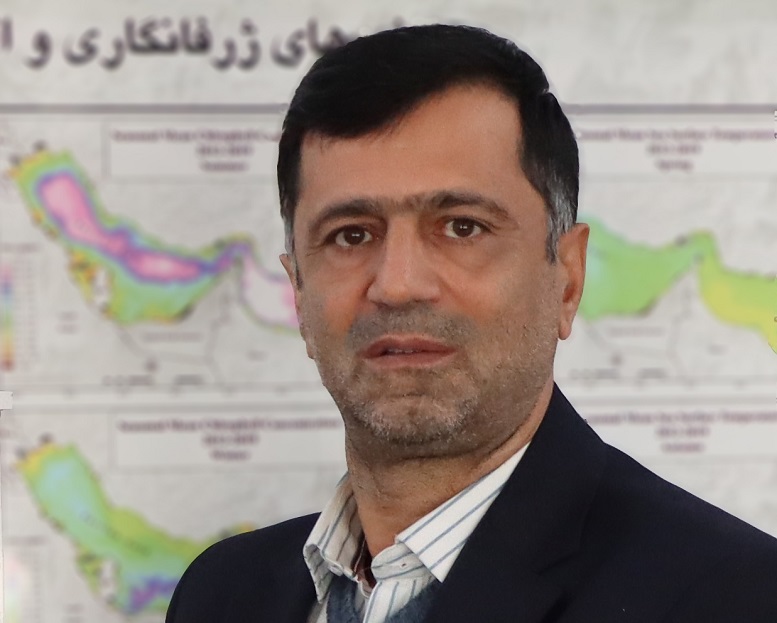
In an interview with IRNA, the head of the Oceanographic Research Institute stated;
Lack of a trans-sectoral organization in sea-oriented development and three major challenges of oceanography
Tehran - IRNA - The head of the National Research Institute of Oceanography and Atmospheric Sciences considered the lack of an oceanic and maritime cross-sectoral organization as the main gap in the field of oceanographic development and named marine tourism, underwater heritage and intangible heritage as the three neglected areas of this field in oceanography..
IRNA Scientific Group - National Research Institute of Oceanography and Atmospheric Sciences is a scientific institution under the supervision of the Ministry of Science, Research and Technology, which responds to national and international needs in the field of oceanography and atmospheric sciences by conducting research, education, technology development, policy research and providing scientific services..
This research institute has three ocean science research institutes, marine engineering and technology research institute and atmospheric science research institute, and besides it has several research centers, research stations in the south and north coasts of the country, central laboratories and also the only sea research vessel named "Persian Gulf Explorer"..
This research institute is a representative of several international institutions, such as the UNESCO International Oceanic Committee, the Islamic Countries Oceanographic Science and Technology Network, the Central Indian Ocean Regional Committee, the International Committee for the Exchange of Ocean Data and Information, the Indian Ocean Tsunami Warning and Mitigation System, the Scientific Committee for Antarctic Research, the West Asia Regional Oceanographic Research Training Center, the Central Indian Ocean Ocean Data and Information Network, the Global Ocean Observing System in the Indian Ocean, the Intergovernmental Oceanographic Commission UNESCO is a global coral reef monitoring network and an ocean biogeography information system that deals with its national and international duties in this regard..
The main research activities of the institute include monitoring the coastal and offshore areas of the Iranian seas (Persian Gulf, Oman Sea, Indian Ocean and Caspian Sea), tropical storms, climate change, rip currents, hypoxia of the seas, water level changes and tsunamis; study of sensitive coastal habitats (mangroves, corals, grasslands); The pollution of the sea (microplastics, acidification of the oceans, oil pollution), Antarctica and the general study of the seas of Iran (the Caspian Sea, Oman and the Persian Gulf), which is now the responsibility of Morteza Tavakoli.
Tavakli in the details of his conversation with Irena He said briefly about oceanography: Oceans are more than 70 The percentage of land covered and approx 50 The percentage of oxygen they produce. On the other hand, there is a close relationship between the ocean, human life and livelihood, and in fact, ocean ecosystems are natural climate regulators and hosts a large part of life and biodiversity on earth and the main source of food for more than ۲ billion people around the world.He added: In addition, more than three billion people depend on marine and coastal biodiversity for their livelihood, which can lead to climate change, water quality reduction, direct reduction of biomass and biodiversity in the ocean, which statistics show, we have damaged it more than it can be renewed..
The head of the National Research Institute of Oceanography and Atmospheric Sciences said about the contribution of oceans and seas in global equations: the use of oceans and seas in terms of transportation, trade, supply of food and medicine resources, mineral resources, supply of drinking water, tourism and national security has a very special importance in today's world. Therefore, paying attention to the importance of oceans, seas and lakes in the economy has a lifespan of nearly three decades.
Tavakli continued: Countries that have put the sustainable development of the coasts at the top of their policies have been able to experience high economic growth in these areas. On the other hand, the economy of coastal areas is one of the most important tools that make it possible to compare and examine the development process. For this reason, in many countries, economic criteria are used to estimate the importance of natural resources in the country's national economy.
He considered research and development necessary to strengthen innovation, advance science and technology, solve social challenges, drive economic growth and prepare for the future and said: By investing in research and development, countries can put themselves at the forefront of progress and contribute to creating a better and more stable world. Considering the importance of the sea and being close to 5800 km of the water border in the country and the major volume of the country's trade that is carried out by the sea, as well as the territorial and food security of the country from the sea, the necessity of knowing these God-given resources that create opportunities through research and development is obvious..
According to the head of the National Research Institute of Oceanography and Atmospheric Sciences, the nature of marine activities requires research and operations to measure various indicators in the sea, which is a very expensive matter. According to the research institute's mission of conducting marine research in the southern and northern seas of the country, carrying out programs in the field of research, technology, education, promotion of marine sciences, research policy and scientific services, it responds to national and international needs in the field of oceanography and atmospheric sciences.. In another part of his statement, Tavakli mentioned the main issue in the discussion of the ocean in the Persian Gulf region, which has attracted most of the world's media and economic attention due to its geopolitical, cultural and economic position..
He called the Persian Gulf the third largest gulf in the world after the Gulf of Mexico and the Hudson Bay in Canada and said that the Strait of Hormuz is the most important passage for the entry and exit of oil to the world and one of the most important ways for the passage of non-oil goods from Southeast Asia to the Middle East and also one of the most strategic regions in the world. The Persian Gulf and the Oman Sea are also considered one of the most important strategic and commercial centers of Iran, which have various biological species to oil and gas resources..
The head of the National Institute of Oceanography and Atmospheric Sciences also said that the Persian Gulf basin is close to 90 It has the percentage of water softeners in the world and in the year 1401 approx 850 There has been a water softener, among which approx 25 Item with a capacity of over 100 1,000 cubic meters of fresh water per day. This fresh water is the result of the consumption of carbon and gas fuel and compared to the countries of Qatar, Bahrain, UAE, Oman, Saudi Arabia and Kuwait, Iran's share of water softeners is insignificant..90 percent of oil reservoirs and 42% of gas reservoirs in the world are in the Persian Gulf basin
Tavakli also stated that the salinity of the water in the Persian Gulf is higher than the global level and stated: Most of the world's oil and gas reservoirs are located in this area, and the same amount of ship traffic for energy transfer is at the highest possible level in the field of energy transfer in the Middle East, and in the area of transporting consumer goods, the most ship traffic is located in Southeast Asia and Chinese ports..He added that a high percentage of refineries and petrochemical plants are located on the shores of the Persian Gulf, and in this regard, we are facing various problems in the Persian Gulf, such as climate change and pollution, which have affected the Persian Gulf and the oceans, causing an increase in water temperature, a decrease in oxygen, and the change or migration of biological species..
There was no vacuum of a multi-sectoral oceanic and maritime organization
The head of the National Research Institute of Oceanography and Atmospheric Sciences continued to discuss the issue of sea-oriented development and said: In recent years, the issue of sea-oriented development and sea economy has received the attention of governments, especially the 14th government, which is considered the basis of a cross-sectoral topic, and various agencies are busy to implement its parts. What can be stated as a fundamental gap in this field is the absence of a cross-sectoral ocean and maritime organization that can help to integrate policies, avoid duplication and joint targeting based on the program..
Explaining more in this regard, Tavakli said: The Supreme Leader emphasizes that the sea-based economy sector is twice the capacity of the land economy, and obviously the cost of transportation in the sea is much cheaper than on land. Marine farming and marine foods can ensure our food security and help the country in the energy issue, and also have an impact on the country's economy in terms of medicine and pharmaceutical products and tourism. Therefore, a cross-sector organization is needed to follow up and operate these issues in the form of a joint and coordinated plan and to determine and explain their duties to the relevant organizations. Without a doubt, until this consensus and organizational consensus is achieved, we cannot expect much from the development of the sea-based economy..
The head of the National Research Institute of Oceanography and Atmospheric Sciences believes that the view of sea-oriented development is that Iran has a huge capacity of resources and God-given gift that should be used. Why should our beaches be among the poorest beaches and we should not use the coastal capacity like other countries. We must direct the development policies towards the sea-oriented development policy and our view on the sea-oriented development area is strategic and strategic..Tavakli mentioned other areas of activity of the National Research Institute of Oceanography and Atmospheric Sciences as scientific diplomacy and said: Many countries such as China, the United States, India, and Norway, which use the resources under the seas, have been able to gain good points and wealth for their country, but we have not been able to use the underwater reserves..
Iran has a huge capacity of resources and God-given gift that should be used. Why should our beaches be among the poorest beaches and we should not use the coastal capacity like other countries. We must direct our development policies towards a sea-oriented development policy, and our view of the sea-oriented development field is strategic and strategic. Iran's insignificant contribution in maritime tourism
He listed maritime tourism as one of the other research topics of this research institute and said: Iran's contribution in this field is insignificant, while this important topic can also make a significant contribution to the country's economy. Due to having a sea border and islands, some of which are also considered as geopolitical assets of the country, the national importance of maritime tourism can be highlighted..The head of the National Research Institute of Oceanography and Atmospheric Sciences considered oceanography to be the science of peace and said: In the field of oceanography, we have very good relations with the countries bordering the Indian Ocean, and now we are the vice-chairman of the Indian Ocean Commission, and we also have a special interaction with neighboring countries such as Pakistan and Oman, which brings our scientific exchange closer to each other..
Persian Gulf probe, an important capacity in maritime security
In another part, Tavakli mentioned the four research stations of this research institute in Bandar Abbas, Bushehr, Nowshehr and Chabahar and said: In these stations, scientific, research and laboratory activities in the fields of marine and ocean sciences are carried out by experts and using laboratory equipment..
He pointed out that the research institute also has four national centers for forecasting and warning of marine hazards, the National Marine and Ocean Data Center, the National Antarctic Research Center and the West Asian Oceanography Center, which carry out research and research activities, and continued: In addition to this, the research institute has the "Persian Gulf Marine Probe", which is the country's first research vessel that conducts research and field activities in the fields of marine and ocean sciences..
The head of the National Research Institute of Oceanography and Atmospheric Sciences reminded: the main work of this native explorer is monitoring the Persian Gulf based on 61 It is a biological, chemical, geological and hydrological index. This ship has successfully carried out complete sea patrols for five years, which is a good strength, and we have established this capacity, and information immunity related to maritime security has been established..Tavakli added: The Persian Gulf probe is one of the best probes and is equipped with four chemistry, biology, physics and marine geology laboratories and a desalination unit. ۹ The research tour by the experts of the research institute studied and explored the Persian Gulf and the Oman Sea, which can play a significant role in identifying Makran beaches as the unknown beaches of the country. We are trying to strengthen the governance role of the research institute with the help of the ship.
The importance of Iran's presence in Antarctica
He further pointed out the importance of Iran's presence in Antarctica and said: The National Research Institute of Oceanography and Atmospheric Sciences, as the main center of Antarctic studies, introduces areas that can be important and beneficial for the country and also play an increasing role in this field due to its scientific capacities. The real value of Antarctica for humanity should be found in the scientific discoveries under the ice surface of this continent. While Antarctica has gradually become the center of world attention due to its mineral resources and oil reserves, climate changes in this continent, in addition to the global warming of the seas and the atmosphere around it, which has accelerated the melting of ice and the rise of sea levels, will increase the absorption of carbon dioxide by the Southern Ocean and endanger the survival of marine life in the area of the food cycle of animals. Therefore, discovering the secrets of Antarctica is now more vital than ever
The head of the National Research Institute of Oceanography and Atmospheric Sciences added: Now more than 70 The base belongs to 31 The country is engaged in peaceful scientific research in the Antarctic continent, and in the meantime, Iranian researchers should also conduct research in Antarctica faster, and we should be able to be present in Antarctica in the coming years because many activities have been carried out in this field..
Tavakli said: Entering the club for the first time 14 The country became capable in the field of research in deep waters, which in less than a year exceeded the depth ۲ thousand and 126 meters in the sea of Oman, and it has a strategic role in the knowledge of mineral and biological reserves for the future. We also prepared an atlas of the Persian Gulf and the Sea of Oman, which is approx 160 It has a plan. In the research week of the year 1403 The coastal oceanographic atlas of the Caspian Sea was also unveiled. Also, in the field of ocean literacy, we have a very close relationship with the student community in the coasts.
The head of the National Research Institute of Oceanography and Atmospheric Sciences added: Now more than 70 The base belongs to 31 The country is engaged in peaceful scientific research in the Antarctic continent, and in the meantime, Iranian researchers should also conduct research in Antarctica faster, and we should be able to be present in Antarctica in the coming years because many activities have been carried out in this field..He listed the establishment of the first growth center in Nowshahr station as one of the other measures of this research institute and said: approx ۵ There are billions of sea and ocean data records in the research institute, which requires a set to be processed, and for this purpose, the ocean artificial intelligence laboratory has been set up in the research institute. Also, for the first time, gas hydrates were discovered in the depths of the Oman Sea, which is a unique and privileged work..
Designing educational software for oceanography
The head of the National Research Institute of Oceanography and Atmospheric Sciences announced that in order to support the protection of natural resources, ocean literacy and education for sustainable development, as well as to educate a generation that is aware and preserves the marine environment, with the necessary knowledge, attitude, motivation, commitment and skills, the Research Institute and Regional Center of Oceanography of West Asia, in cooperation with the UNESCO office in Tehran, has designed an educational application to provide education about marine and ocean sciences, which is being finalized.
Tavakli reminded: this software is for mobile phones with Android system andiOSis in which information to ۳ Persian, English and Arabic language will be presented about the marine environment, oceanography and its various fields, including marine biology, marine geology, physical oceanography, chemical oceanography, sea pollution, sea creatures, renewable energy, climate change, and the relationship between humans and the sea. This software is designed so that high school students can use it
Three major challenges in oceanography
He said about the challenges in the field of oceanography: one of the neglected fields in the sea field is marine tourism, and this challenge also exists in the field of underwater heritage and intangible heritage. In the field of underwater heritage, some countries on the shores of the Persian Gulf are trying to make history. For example, in the Abu Musa Islands, there are capacities that we prove by identifying the signs of our civilization that the regions are part of Iran's territorial essence..
The head of the National Research Institute of Oceanography and Atmospheric Sciences pointed out that the main problems in the field of oceanography and oceanography in Iran is the neglect of the transboundary capacities of the seas, and now addressing these issues in the fields of energy, economy, management, tourism, mines and reserves, underwater heritage is the priority of the programs of this research institute..