In a conversation with IRNA, it was mentioned: Aqueous ammonia, a new approach in the shipping industry
 |
Tehran - IRNA - The Vice President of Research and Education of the National Research Institute of Oceanography and Atmospheric Sciences stated that the International Maritime Organization has put the use of innovative solutions on its agenda with the aim of reducing greenhouse gas emissions by 50% by 2050, and said: Aqueous ammonia has attracted a lot of attention as a carbon substitute fuel.
On Wednesday, in an exclusive interview with IRNA's scientific reporter, Ali Mehdinia said about the new approach in the maritime industry: Today, due to increasing concerns about climate change and its destructive effects on the environment, the maritime industry is looking for solutions to reduce greenhouse gas emissions and achieve the goals set by the International Maritime Organization.
He added: The shipping industry, as one of the key sectors of the global economy, is responsible for more than 80% of international trade. However, this industry, with a share of about 3% in the global emission of greenhouse gases, is also considered one of the important sources of air pollution and annually enters more than 1056 million tons of carbon dioxide into the atmosphere.
The Vice President of Research and Education of the National Research Institute of Oceanography and Atmospheric Sciences further said: International agreements such as the Kyoto Directive and the Paris Agreement, as well as the actions of the United Nations through summits and sustainable development goals, emphasize the reduction of pollution and the development of clean technologies in the maritime industry. Also, the reports of the Intergovernmental Panel on Climate Change known as IPCC and the International Convention for the Prevention of Pollution from Ships (MARPOL 73/78) also play an important role in this direction with the aim of reducing the emission of pollutants in the maritime transport industry.
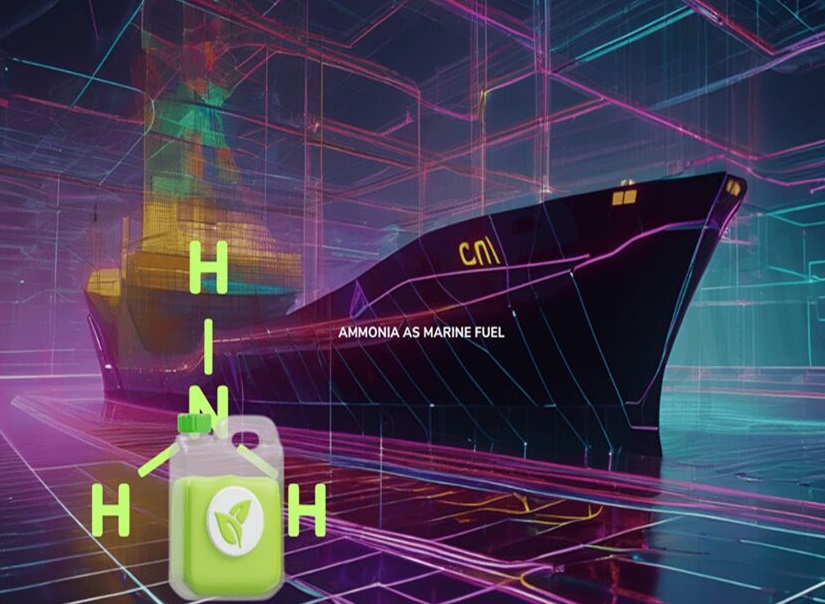
According to Mehdinia, based on the report of the Intergovernmental Panel on Climate Change in 2019, the sea level is expected to rise by 32 cm by 2050, which will put a lot of pressure on the transportation and energy industries. International Maritime OrganizationIMO) has also put the use of alternative fuels and innovative solutions in its agenda with the aim of reducing greenhouse gas emissions by 50% by 2050. He explained about blue ammonia that ammonia (NH₃) is produced from the combination of nitrogen and hydrogen. This process, known as the Haber-Bosch process, is widely used in industry. The chemical formula of this reaction is also N2+3H۲→۲NH۳N2+3H۲→۲NHIt is 3. Accordingly, in the production of aqueous ammonia, carbon dioxide (CO₂) caused by the extraction of hydrogen from natural gas is absorbed and stored in underground reservoirs.
The vice president of research and education of the National Research Institute of Oceanography and Atmospheric Sciences stated that carbon absorption and storage technology (CCS) can be up to 95% of CO₂ remove production and nitrogen extracted from the air is an abundant and renewable source and in terms of physical properties it is a colorless gaseous ammonia with a pungent smell that at the temperature of °C 34/33 - turns into liquid.
Advantages of aqueous ammonia
Mehdinia talked about the advantages of using aqueous ammonia in the maritime industry and said: this fuel does not emit any carbon dioxide when it burns, and if the process is used CCSThe emission of greenhouse gases in the entire production chain is also minimized. Ammonia combustion, sulfur oxides (SOx(or does not produce suspended particles and nitrogen oxides)NOx) also using technology SCR are controllable. Also, the existing infrastructures in more than 120 world ports have made it possible to store and refuel ammonia. In terms of energy density, water ammonia has less energy than heavy marine fuels with 12.7 megajoules per liter, but its energy density is higher than hydrogen.
He continued: Ammonia is easier to transport and store compared to hydrogen, because it turns into a liquid at a higher temperature and does not require very high pressure. However, the use of aqueous ammonia is associated with challenges such as its high toxicity, which requires safety precautions when working with it.
The vice president of research and education of the National Research Institute of Oceanography and Atmospheric Sciences said about its other benefits: using aqueous ammonia as an alternative fuel in the maritime industry, in addition to environmental benefits, also has economic benefits. This fuel can help reduce the costs associated with air and water pollution. Also, due to the existing infrastructure for ammonia storage and refueling, this fuel can be considered as a cost-effective option compared to some other alternative fuels. Several countries are now developing the necessary infrastructure to use aqueous ammonia. For example, Japan plans to use 30 million tons of ammonia for domestic and shipping purposes by 2050 and reduce the price of this fuel by half. In Japan, the world's first shipment of blue ammonia was received from Saudi Aramco in 2020, indicating a change in the country's energy mix.
 |
The effect of aqueous ammonia on climate
Mehdinia explained about the effect of aqueous ammonia on the climate, that it leads to the reduction of fugitive methane emissions from the natural gas supply chain, which is very important. While it is possible to extract natural gas with minimal fugitive emissions, there are also examples of irresponsible practices that lead to excessive fugitive emissions. Countries like Norway by implementing projects like MIQ It has been shown that effective regulation of fugitive methane emissions is possible. Therefore, it seems necessary to create and implement the best practices for authentic certification of raw materials and emission control. He further added: On the other hand, while the possibility of storage CO₂ It is certified in terms of capacity, certification and development of permanent storage infrastructure CO₂ It should be expanded. Consequently, the development of a global infrastructure for storage CO₂ Another key factor is the use of aqueous ammonia as a fuel.
The vice president of research and education of the National Research Institute of Oceanography and Atmospheric Sciences said in completing this section: In general, in order for water ammonia as a low-emission fuel to have a positive effect on the climate, it should be done in three key areas, including issuing a certificate to reduce fugitive methane emissions, fully absorbing emissions CO₂ He paid attention to the process of modification and issuance of certificates for the permanent storage of these emissions during the operational life of the production facility.
Mehdinia also said that ammonia is managed as a global commodity today and several conceptual plans have been developed for the design of ammonia fueling ships, which is expected to make up about a third of the fuel supply to the marine fleet by 2050. However, to achieve this goal, the development and acceptance of this fuel requires extensive time and efforts. In addition to setting new standards for the safety and proper management of ammonia refueling, investment in advanced infrastructure and technology is also required.
He stated the benefits of using ammonia including non-emission CO₂ In the process of burning fuel, he mentioned the condition that hydrogen produced with renewable energy is used for its construction and said that this fuel can help the maritime transport industry to achieve the goals of reducing global emissions and reducing environmental pollution. However, there are still gaps in the development of standard processes for the safe handling, storage and refueling of ammonia as a marine fuel. For this reason, the industry should investigate the potential safety risks associated with using ammonia as an alternative fuel.
At the same time, the vice president of research and education of the National Research Institute of Oceanography and Atmospheric Sciences considered ammonia to be very toxic and said that safety in ships is an important challenge for the use of this fuel. Based on this, the assessment of the risks of ammonia leakage into marine environments as a result of spills or accidents during refueling operations or in case of ship collision and sinking and their impact on ecosystems, ship design and costs are key areas of research to enable the adoption of this fuel route.