Dr. Tavakli stated: The Persian Gulf is a unique bay in the world
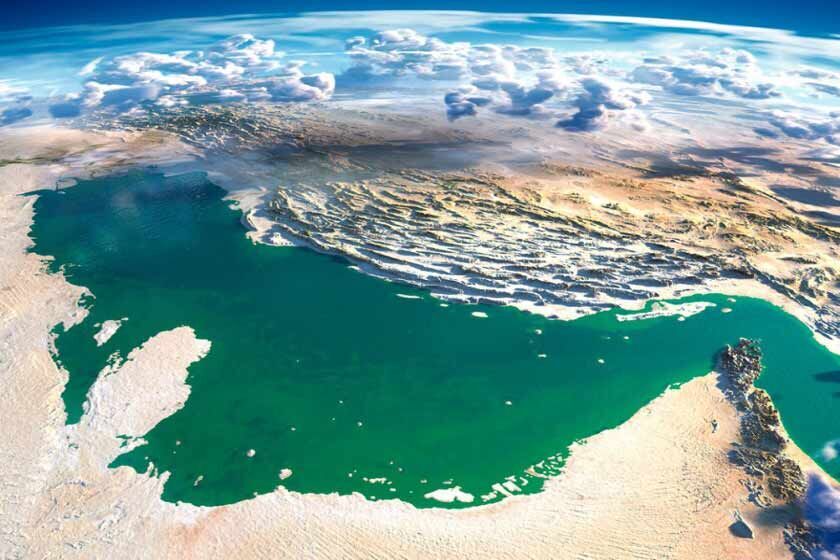
 |
Tehran - IRNA - Dr. Morteza Tavakoli, the head of the National Research Institute of Oceanography and Atmospheric Sciences, called "Persian Gulf" an incomparable gulf and said: The Persian Gulf is not only a natural and economic treasure, but also a symbol of Iran's historical and national identity. Despite the environmental, security and political challenges, international cooperation is necessary to maintain the stability of this region.The Persian Gulf, with the historical name "Persian Sea", is one of the most important waterways in the world, which has played a key role in the political, economic and cultural developments of the Middle East region and the world..
The Persian Gulf is located along the Oman Sea and between Iran and the Arabian Peninsula. Its area is approx 239 It is one thousand square kilometers and it is the third largest bay in the world after the Gulf of Mexico and Hudson Bay. Its length from the Strait of Hormuz to the Orundrud Delta is approx 805 km and its width between 56 until 290 Kilometers are variable.The deepest point of the Persian Gulf 180 meters near the island of Tob is large, while its western regions with depth 10 until 30 meters are shallower. The climate of the Persian Gulf is dry and semi-tropical, with summer temperatures of up to 50 Celsius and winter up to ۳ degrees Celsius Despite the salinity of the water, many fresh water springs flow in its bottom and shores, whose origin is the Zagros Mountains in Iran..The Persian Gulf hosts unique ecosystems such as coral reefs and marine species such as pearl oysters, shrimp and valuable fish such as Muscat Hoover..
Naming background The name "Persian Gulf" is rooted in ancient civilizations. In Achaemenid inscriptions, including Dariush's inscription in the Suez Strait, this waterway is mentioned as "the sea that comes from Persia"..Greek sources such as Herodotus also mentioned it as "Persikos Sinus" (Persian Gulf). In medieval European maps, this name was widely used. of the decade 1960, some Arab countries promoted fake names with the support of British colonialism. This action was first initiated by Roderick Owen, the British political representative in Bahrain.
Energy reserves Persian Gulf hosts 730 billion barrels of oil (63 percentage of global reserves) and 70 trillion cubic meters of natural gas, and its border countries, including Iran, Saudi Arabia, and the United Arab Emirates, are among the world's largest energy exporters..Rich fields such as the South Pars gas dome (common between Iran and Qatar) play a vital role in the global economy. Strait of Hormuz, the only communication route between the Persian Gulf and the Indian Ocean. 40 A percentage of the world's oil trade passes through this strait as a security belt, which has always been the focus of world powers. Any disturbance in the passage of oil tankers through this strait will lead to global economic crises.
Commercial and logistic importance Since ancient times, the Persian Gulf has been the center of spice, silk and pearl trade between East and West. Today, Persian Gulf ports play a key role in maritime trade. Also, this area is vital for international shipping lines due to its location connecting three continents (Asia, Europe, Africa)..
oil pollution The extraction of oil and its leakage into the sea has led to the destruction of coral reefs and the reduction of biodiversity. Reportedly, annually 1.5 Millions of tons of oil are leaking into the waters of the Persian Gulf.
Climate change Warming, acidification, reduction of dissolved oxygen in water, rising sea level and increasing water salinity threaten coastal ecosystems and fishing economy. Iran with 1800 km, the blue border has the longest coastline in the Persian Gulf.Iran by implementing plans such as the National Day of the Persian Gulf (10 Ardibehesht) and its global registration in the WIPO organization (2018)has preserved the historical identity of this waterway. Also, Iran is active in fighting fuel smuggling and protecting the environment of the Persian Gulf.The Persian Gulf is not only a natural and economic treasure, but also a symbol of Iran's historical and national identity. Despite the environmental, security and political challenges, international cooperation is necessary to maintain the stability of this region.Iran's role as the main power in the Persian Gulf requires active diplomacy and strengthening of defense infrastructure in order to withstand distortions and threats. The rare and unique phenomena of the Persian Gulf are the result of a combination of extreme climatic conditions, special hydrodynamic structure and unique geological features of this waterway, some of which are:
Two-layer hydrodynamic structure and limited water exchange Two-Layer Circulation: The Persian Gulf is a semi-enclosed waterway with moderate depths between 30 until 50 meters and maximum depths of approx 80 until 90 meters Since the exchange of water with the Indian Ocean takes place only through the Strait of Hormuz, a two-layer pattern is formed; In this way, fresher and relatively warm water enters the gulf from the surface, and after intense evaporation and increase in salinity, the heavier and salty water sinks deep. This phenomenon causes the renewal time of the whole water of the bay to reach several years; A subject that is rarely seen in open environments.Effects on ecological cycles: This two-layer circulation involves the transport of oxygen, nutrients and even pollutants in a limited depth. The created halocline layer prevents the strong mixing of surface and deep water and as a result, if pollution enters, it remains depending on the depth and its effects are felt in the long term..
Intense evaporation and increased salinity High evaporation rate: the Persian Gulf region is located in hot and dry areas; So that in summer the water temperature is more than 35 degrees Celsius is reached. This temperature, along with a lot of evaporation, increases the concentration of salt in water.Exceptional salinity: in the normal sea state, the salinity is approx 35 PSU (practical unit is salinity), but in some parts of the Persian Gulf, due to intense evaporation, salinity can be 42 until 45 PSU or even higher. This increase in salinity not only affects the hydrodynamic structure, but also gives rise to species of marine organisms that can only survive in extremely salty environments..
Formation of subkhas and salt surfaces Saline sedimentation phenomenon: in the marginal areas and lower beds of the Persian Gulf, due to evaporation exceeding the amount of water intake, places called "Sabkha" or "salt surface" are formed. In these places, the salts removed from the water gradually accumulate and create natural salt coatings.Color maps and geometric structure: Due to the difference in sedimentation and erosion patterns, these sabkhas have very beautiful and diverse structures and geometric patterns, which are complex in some areas. (intricate) And it looks colorful. These phenomena, in addition to their scientific importance in examining past climate changes, are also considered as visual and tourist attractions..
Unique biological ecosystems Adaptability of native species: harsh environmental conditions (high temperatures, high salinity, limited water exchange) have caused organisms specific to this ecosystem to grow. Special species of fish, invertebrates, marine plants and microorganisms are found in this exclusive environment. These species have evolved to withstand low oxygen diffusion and high evaporation rates..Rare biological events: transport of nutrients entering the bay mainly through surface currents, cyclically due to strong stratification (ring-like) and remain limited in specific areas. These conditions have created phytoplankton blooms in certain periods, which, although in some cases, can be harmful, but from a biological point of view, it is a clear example of adaptation in environmental stress conditions..
Geological features and light islands Formation of unique islands: Islands such as Qeshm, Kish, Hormuz and Abu Musa are examples of geological beauty in the Persian Gulf. These islands tell ancient geological stories with their solid rocks and colorful sedimentary layers. The processes of erosion, tectonics and sea level change over millions of years have resulted in the creation of silent and extraordinary structures..Tectonic patterns and geological history: In addition to visual beauty, the study of the geological structure of these islands provides valuable information on the history of the earth, sea level changes and past climate changes. These patterns help researchers explore the complex equations between environmental, geological, and ecological changes..
Visual and optical phenomena Blurred horizons: due to obvious changes in temperature and high evaporation, the boundary between the sky and the sea sometimes appears as a blurred tableau or horizon. This phenomenon of "optical confusion" may include mirage (Mirage) or heat rays that provide a dynamic and changing landscape.Environmental optical effects: Sunlight that passes through warm and very salty layers sometimes causes the blue and green colors in the water to change and give it an unusual appearance. These unique color changes in combination with the surrounding dry and desert atmosphere create a very special landscape.
Environmental challenges due to unique characteristics Low resistance to pollution: Due to the limitation of water exchange, any pollution (such as oil stains, chemicals or industrial pollution) in the Persian Gulf is not quickly removed and can remain in the environment for several years. This feature creates serious challenges for environmental management and protection of marine ecosystems..Disturbance in nutrient cycles: strong stratification and lack of effective mixing of deep and surface waters in hot seasons cause limitations in the distribution of nutrients. In addition to affecting the primary production of biological remains, this causes changes in ecological cycles and the structure of the food chain..
Mangrove forests with tidal capability Feature: The mangrove forests in Qeshm and Hormuz islands are the only marine forests in Iran that completely sink or appear in the water with the tides. These trees filter salt water with their aerial roots and do natural desalination.Habitat: Host 80 The percentage of aquatic life in the Persian Gulf is for spawning and habitat for migratory birds such as herons and kingfishers.Unique: the only mangrove forests in the world that live in an environment with high salinity and extreme summer temperatures (up to 50 degrees Celsius) grow.
Coral stones resistant to extreme heat Extraordinary adaptation: Persian Gulf corals at temp 36 degrees Celsius survive, while the same temperature in other parts of the world causes corals to bleach and die..Threats: Unfortunately 70 The percentage of these corals have been destroyed in the last few decades due to oil pollution and climate changes (extreme heat waves)..
Red soil of Hormoz Island Unique geology: the red soil of Hormuz with iron oxide and mercury sulfide compounds is one of the rarest colored soils in the world. This soil is used in the local spice "Golak" and has edible properties.Fantastic view: Hormuz Rainbow Valley with 90 The color spectrum, including red, yellow, silver and blue, is considered one of the most beautiful natural phenomena in the world..
Sea turtles with evolutionary adaptation Temperature-based gender regulation: On the Persian Gulf coast, sand temperature determines the gender of green and hawksbill turtles. Despite global warming, the populations of these turtles still have a balanced sex ratio, unlike other regions such as Australia where 99 The percentage of babies are female. Threats: Coastal constructions and light pollution have disturbed their egg laying.
Fresh water springs at the bottom of the Persian Gulf Hydrogeological wonder: ca 200 Fresh water springs flow in the bottom and shores of the Persian Gulf, which originate from the Zagros mountains. In ancient times, these springs made the life of human societies possible in the region.
Salt islands and salt domes Geological phenomenon: Hormuz and Qeshm islands host salt domes that were formed by subduction of the Arabian plate under the Zagros. These structures contain rare minerals such as hematite and ochre.
Strait of Hormuz: Global Energy Highway Strategic importance: 40 percent of the world's oil trade through this strait 33 A kilometer passes. Shallow depth (max 93 meters) and complex water currents have made it one of the most complicated shipping routes.
Sources of natural pearls Historical and economic: The Persian Gulf has been a source of natural pearls since ancient times, which are described as the most precious gems in Sumerian and Roman texts. Today, pearl fishing has decreased due to oil pollution and ecosystem change.
Salt-tolerant marine species Fish and crustaceans: Species such as muscat hoover and white shrimp with unique biological adaptations survive in the very salty and warm waters of the Persian Gulf..The rare and unique phenomena of the Persian Gulf, from the two-layer circulation and limited water exchange to high salinity, the formation of salt flats, the existence of unique native species, the impressive geological features of the islands and even special optical phenomena, all indicate a very dynamic and yet sensitive environment..These features not only serve as valuable lessons for understanding climatic and geological developments, but also have far-reaching implications for environmental and economic policies in the region. Continuous researches in the fields of hydrodynamics, ecology and geology of the Persian Gulf can help to develop new strategies for the protection and sustainable management of this sensitive ecosystem..Also, a more detailed examination of these phenomena can reveal the secrets of geology and climate changes of the past and future, which is important for scientists and decision-makers at the regional and global levels.