Dr. Hamzaei in a conversation with Sobbeh Sahel: The dead sea areas in the Persian Gulf are increasing
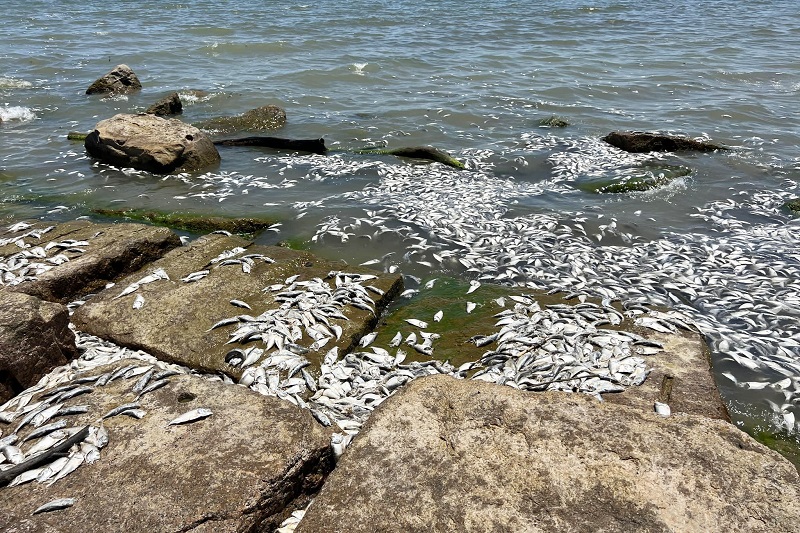
Dead Sea areas in the Persian Gulf are increasing;
Death on the bed of the sea
Dead Sea Zones are areas of the sea and ocean where dissolved oxygen is severely reduced and there is no or very little possibility of life for organisms. Low oxygen conditions (hypoxia) and no oxygen conditions (anoxia) are called, low oxygen and anoxia cause the death of aquatic animals such as fish, invertebrates and sea plants, because most marine organisms need dissolved oxygen to survive. Effective factors in the creation of dead sea zones include the excessive input of nutrients containing nitrate and phosphate through inflows from urban and industrial wastewaters and the effluents of agricultural fertilizers and shrimp farms, which causes the bloom of phytoplankton and, as a result, the reduction of oxygen in the lower layers of the water. Global warming and the increase in water temperature also decrease water oxygen and vertical stratification of water, which reduces the mixing of deep waters and prevents oxygen from reaching deeper layers, and also causes the creation of dead sea zones in the depths. Some chemicals and heavy metals also reduce water oxygen by consuming oxygen, in areas where sea waves and currents are weak, stagnant waters retain little oxygen and cause the development of dead sea areas. Currently, the Gulf of Mexico, Oman Sea, Arabian Sea, Bay of Bengal, Baltic Sea and Chesapeake Bay are known as the largest dead sea areas.
A look at the pollution factors of the Persian Gulf
The Persian Gulf is added to the dead sea areas of the world due to the influx of agricultural pollutants and sewage, the occurrence of phytoplankton bloom phenomena and climate changes, especially the increase in temperature, the increase in oil and industrial activities, the limited exchange of water with the Sea of Oman and the destruction of coastal habitats. The high volume of runoff from agricultural activities, aquaculture, and urban and industrial wastewater has increased the possibility of harmful phytoplankton bloom, which reduces water oxygen with the rapid growth of phytoplankton.
The Persian Gulf has one of the hottest waters on the planet, as the water temperature increases, the solubility of oxygen in water decreases, global warming and climate change have had the most negative effect on the amount of dissolved oxygen in the Persian Gulf. Also, due to the high volume of oil activities such as drilling and oil spills, pollutants such as sulfur and heavy metals have increased in marine ecosystems, which has reduced dissolved oxygen in the Persian Gulf.
The Persian Gulf countries are highly dependent on desalination facilities and desalination plants, desalination of sea water and the increase of hot and salty wastewater (water) that contains large amounts of detergents, anti-sediment and anti-algae substances has also caused a decrease in dissolved oxygen in water in the areas near these desalination plants. Due to the limited exchange of water between the Persian Gulf and the Sea of Oman, the possibility of self-purification in the Persian Gulf is low, hence there is a possibility of the accumulation of pollutants and the reduction of dissolved oxygen.
The decrease in the amount of coral reefs due to the increase in temperature, water turbidity, decrease in sea grass and mangrove forests, which act as a natural filter of pollutants, has also caused a decrease in dissolved oxygen in the Persian Gulf.
In the Persian Gulf, many areas are susceptible to becoming a dead sea zone, these areas include shallow coastal areas in the Bandar Abbas coast due to the shallow depth and density of nutrients caused by urban, industrial, agricultural and shrimp farming effluents and limited water exchange from areas that are prone to creating a dead zone.
Areas prone to creating dead sea zones
The northern areas of the Persian Gulf in the area of the Arvandroud estuary, the southern coasts of Iraq and Kuwait are prone to become a dead sea zone due to the high volume of agricultural effluents containing phosphates and nitrates and the accumulation of sediments rich in noble substances that cause oxygen consumption and hypoxia. Other areas such as Khor Musa, Bahmanshir, around Bandar Mahshahr and Asaluyeh are also in such a situation due to the large concentration of oil, gas and petrochemical industries, the entry of industrial effluents and desalinated water, and oil pollution.
The coasts of the UAE and Qatar are prone to creating dead sea zones due to the development of artificial islands that disrupt the flow of water, the discharge of wastewater from desalination plants, and many constructions in shallow coastal areas. Other areas where coral reefs were destroyed, such as the waters around the islands of Kish, Lawan, Faroor and islands close to the United Arab Emirates, are prone to hypoxia due to heating, pollution, death of corals and the increase of high-quality materials.
Measures to prevent the expansion of dead sea zones
In order to prevent and reduce the expansion of dead sea zones in the Persian Gulf, it is necessary to take coordinated and urgent measures at the regional level. These measures can include things such as reducing the entry of effluents from shrimp farms, agricultural fields, sewage effluents from cities and industries into marine environments. Monitoring the oil and gas and petrochemical industries to reduce the leakage of oil products into the marine environment, the use of modern and relatively clean technologies in desalination of sea water and the recovery of saline waste water, planting and protecting mangrove forests, reviving coral reefs and increasing marine protected areas can reduce the increasing trend of increasing dead marine areas in the Persian Gulf.
By continuously monitoring the water quality of different regions of the Persian Gulf, including monitoring the increase in temperature, salinity, dissolved oxygen, nutrients and increasing the regional cooperation of the countries of the Persian Gulf, a specific framework can be achieved to reduce dead sea areas in this region.
Adopting stricter environmental laws and standards and imposing heavy fines for polluters of marine environments, educating local communities living in coastal areas, developing responsible tourism for the marine and coastal environment, especially in sensitive marine areas, and establishing a convention to protect the Persian Gulf between countries bordering this Gulf and cooperating with international organizations can be effective in reducing the creation of dead sea zones.