Clues of the origin of suspended particles in the Persian Gulf; The link between nature, man and climate change
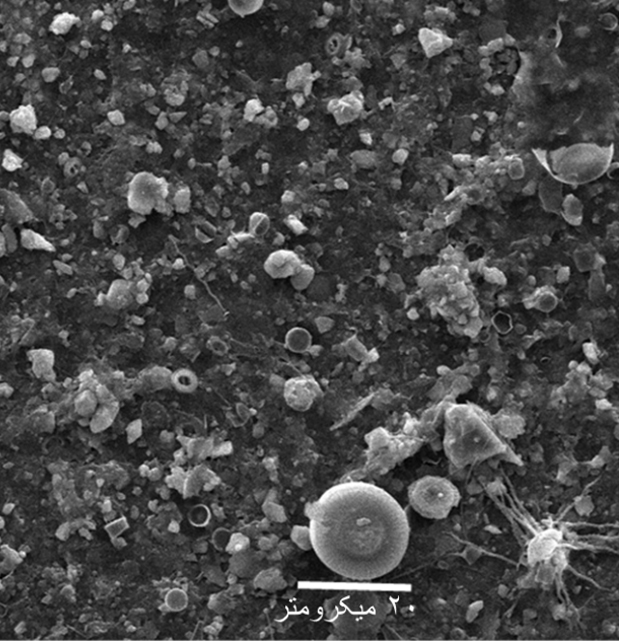
Public relations of the National Institute of Oceanography and Atmospheric Sciences - The results of a new scientific study conducted by the researchers of this institute show that it is possible to identify the sources of the production of suspended particles in the Persian Gulf by examining the simple ratios of chemical elements.
The waters of the Persian Gulf are full of suspended particles due to their shallow depth and being enclosed in dry and semi-arid deserts; Materials that come partly from nature and partly It is caused by human activities. The dust of deserts, sediments of the seabed and the remains of tiny algae are among the most important natural resources. Beside them, the activities of exploration and extraction of fossil fuels, sea transportation, urban sewage and industrial effluents also have a big contribution. Therefore, the composition and amount of these particles is not constant and changes depending on the season, atmospheric conditions and proximity to the origin of these particles.
A recent research at the National Research Institute of Oceanography and Atmospheric Sciences showed that it is possible to find traces of the sources of these particles by examining the simple ratios of chemical elements. Sampling conducted in the years 1398 و 1399 showed that in winter, a large part of the suspended matter comes from microalgae blooms, especially diatoms. On the other hand, in some seasons there is a clear connection between the composition of particles and the introduction of fine dust by prevailing winds, especially from the western and southern regions. These particles not only cloud the water, but can enter the food chain as carriers of pollutants and heavy metals.. The results also revealed that metals such as lead, copper, zinc, and nickel are mostly of human origin and their concentrations are much higher near urban and industrial areas such as Kangan and Khark. This trend confirms the pattern of previous studies on local sediments as well as coral reefs and is considered a danger for the health of the ecosystem and fisheries in these areas of the region.
The increase in the entry of suspended particles through fine dust under the influence of climate change has another important point: these particles are often rich in nutrients such as nitrogen and phosphorus. Such a sudden influx can provide conditions for algal blooms of harmful planktonic species. These blooms disrupt the natural balance of phytoplankton communities, reduce biodiversity and, in many cases, stress the entire ecosystem by producing toxins or consuming too much oxygen. As a result, the organisms upstream of the food chain, including fish, are affected and serious losses are caused to the fishing industry..
On the other hand, the Persian Gulf has a fragile ecosystem due to heat and high salinity, and suspended particles exert additional pressure on it. An increase in water turbidity will reduce the penetration of light into coral reefs and the process of photosynthesis of symbiotic algae in corals will be disrupted; A phenomenon that leads to the weakening and bleaching of corals. These damages not only threaten marine biodiversity, but also overshadow the marine tourism and diving industry; Industries that depend on water clarity and coral reef health.
Therefore, the increase of suspended particles and atmospheric fine dust is not only a limited environmental issue, but a multidimensional threat to the health of corals, the sustainability of the food chain, the livelihood security of coastal communities, and the future of marine tourism. The importance of this study is that by clarifying the origin and consequences of suspended particles, it will help policymakers and researchers to have a clearer vision for managing marine resources and dealing with the effects of climate change in the Persian Gulf..
These findings in the magazine Deep-Sea Research Part II has been published.
https://doi.org/10.1016/j.dsr2.2025.105505
