Conducting a research tour of the Persian Gulf explorer in the Sea of Oman
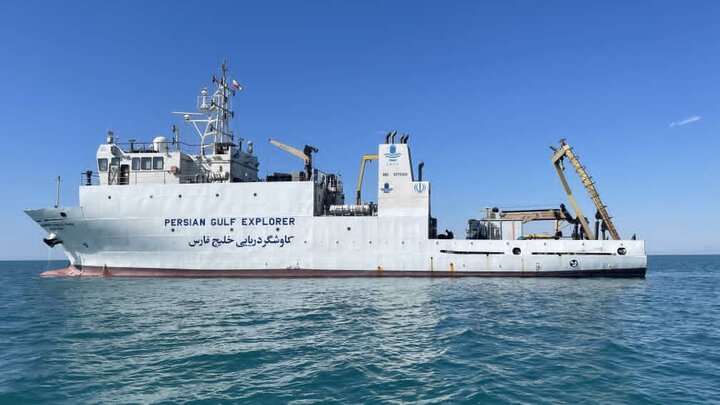
Persian Gulf exploratory research patrol with the aim of helping the sustainable development of the Makran coast in the Oman Sea
The National Research Institute of Oceanography and Atmospheric Sciences organizes a research patrol in the Sea of Oman with the aim of contributing to the sustainable development of the Makran coast.
According to the public relations report of the National Research Institute of Oceanography and Atmospheric Sciences, in order to achieve the country's major goals in the sustainable exploitation of seas and beaches, a comprehensive oceanographic tour will be held in the waters of the exclusive economic zone of the Islamic Republic of Iran in the Sea of Oman from the end of autumn to the beginning of the winter of 1404.
This scientific tour, which lasts for about a month, is carried out with the Persian Gulf research vessel and includes the implementation of the sampling and monitoring program in 95 research stations from the Strait of Hormuz to the water borders of Iran and Pakistan.
As an important part of the Indian Ocean, the Oman Sea plays an essential role in ocean exchanges, shipping and global trade, and at the same time it hosts valuable and sensitive ecosystems such as corals and substrates rich in biodiversity. Despite its great importance, comprehensive and coherent studies have been less developed in this water area than other nearby seas such as the Persian Gulf. Therefore, the implementation of the upcoming patrol will be an important step in filling the scientific gaps and improving the maritime knowledge of the country.
In this tour, different scientific groups of the research institute will conduct extensive studies in the fields of physical, chemical, biological and marine geology oceanography. These studies will include investigating the structure of the water column to depths of more than 2000 meters, monitoring the minimum oxygen conditions (OMZ) and its effects on biodiversity, investigating the cycle of nutrients and primary products, studying carbonate chemistry and the process of sea acidification, tracking mineral, organic and microplastic pollution, as well as investigating phytoplankton, zooplankton, benthic and micro-organism communities. Also, sedimentology programs including the study of geochemistry and mineralogy of sediments, coring, and paleoclimate analysis of the Sea of Oman are also on the agenda.
Another important focus of this patrol is the monitoring and comparison of satellite and drone remote sensing data with field data, which will help improve the accuracy of regional models. In addition, sampling of dust particles over the Oman Sea will be done in order to investigate their origin and role in marine sedimentation.
According to the research institute's public relations report, by holding this research tour, a comprehensive picture of the environmental and biological situation of the Sea of Oman can be obtained; An image that can be the basis of national planning in the field of marine environment protection, fisheries resource management and sustainable development of Makran coast.
The research vessel Kaushgar of the Persian Gulf has completed 9 successful oceanographic patrols in the Persian Gulf and the Sea of Oman between 1396 and 1400, and now for the 10th time, it will embark on a national mission to serve the country's marine-oriented science and development.