International Indian Ocean Tsunami Exercise 2025 (IOWave25) with the scenario of an earthquake with a magnitude of 9 on the Makran fault
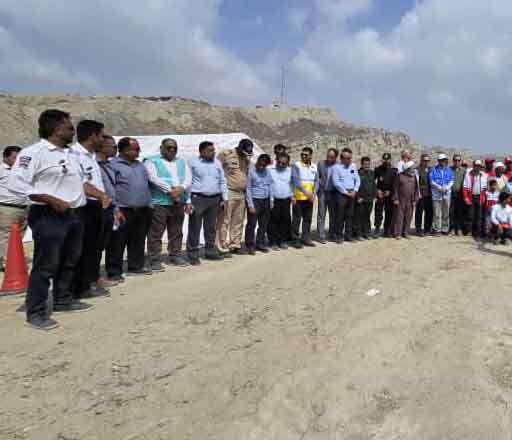
The International Indian Ocean Tsunami Exercise 2025 (IOWave25) with the scenario of an earthquake of magnitude 9 on the Makran fault, was successfully held on Wednesday 23 October (October 15, 2025) at two points on the southern coast of Iran, Chabahar (Sistan and Baluchistan province) and Bahl village of Jask city (Hormozgan province).
This exercise is part of the IOWave25 global program, which is held under the supervision of the International Oceanographic Commission of UNESCO (IOC), and is designed with the aim of increasing the preparedness of the countries of the Indian Ocean region to deal with tsunamis.
The international exercise IOWave25 was designed and coordinated by the International Oceanographic Commission of UNESCO (IOC) and is held with the aim of increasing preparedness to deal with tsunamis in the Indian Ocean basin. This program includes four tsunami simulation scenarios in Sunda Trough (Indonesia), Makran Fault (Coasts of Iran and Pakistan), Fani Maure Volcano (Mozambique Channel) and Sumatra Trough (Indonesia). Iran actively participated in the second scenario of this program, which was dedicated to the Makran fault. This fault, which extends from the coast of Jask in Iran to Karachi in Pakistan, is considered one of the most dangerous seismic zones in the northern Indian Ocean. The great earthquake of 1945 in this region left more than 4000 dead in Pakistan.
In this exercise, it was assumed that an earthquake with a magnitude of 9 on the Richter scale had occurred and tsunami waves with a height of 6 to 20 meters would reach the southern coast of Iran within 15 to 22 minutes. Accordingly, activation of the warning system, emergency evacuation, preparation of temporary shelters and relief exercises were implemented.
Dr. Majid Nouranian Esfahani, head of the National Center for Forecasting and Warning of Marine Hazards, considered the main goal of this maneuver to be "operational preparedness against real dangers" and emphasized that the special location of Chabahar and Jask beaches in the vicinity of the Makran fault has made these areas the first priority for tsunami countermeasures exercises.
He added: "Increasing public awareness, teaching the natural symptoms of tsunami, effective information through the media, and the participation of schools and families were among the key goals of this program."
This exercise was the result of extensive cooperation between the National Research Institute of Oceanography and Atmospheric Sciences, the country's crisis management organization, UNESCO, IOC, governorates, governorates, municipalities, the Red Crescent Society, the police force, the Ports and Maritime Organization, education and other local institutions.
During the exercise, emergency evacuation routes were identified and marked, temporary shelters were designated, and public information was provided to local residents. People's active participation was one of the strengths of this exercise.
This exercise was held with the specialized support of the National Center for Forecasting and Warning of Marine Hazards. This center, affiliated to the National Research Institute of Oceanography and Atmospheric Sciences, is the only specialized institution in the country in the field of maritime hazard forecasting such as tsunami, waves and sea currents. By developing integrated forecasting and warning systems, this center plays a key role in education, quick notification and improving the safety of coastal communities and is recognized as a reference center at the regional level.
