Dr. Afshin's speech at the opening of the national exhibition of knowledge-based capabilities of sea-based economy
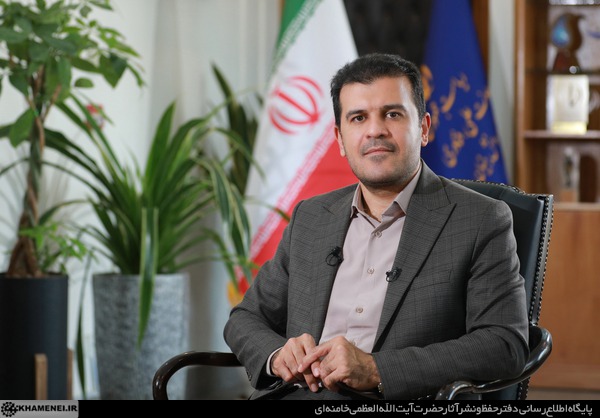
The national exhibition of the knowledge-based capabilities of the sea-based economy will be held on November 27 and 28 at the Imam Khomeini Mosque in Tehran; An event centered on maritime transportation and port services, ship construction and repair, emerging technologies, marine biotechnology, fisheries and aquaculture, and offshore water and energy, which, according to the officials, is a prelude to drawing the country's sea-oriented research and technology roadmap.
In the opening ceremony of the national exhibition of the knowledge-based capabilities of the sea-based economy, Hossein Afshin said that "the sea is not just a blue expanse for nations, it is a horizon", and said: "Each country benefits from the sea according to what it sees and understands from the heart of waves and currents."
Bismillah al-Rahman al-Rahim
Honorable colleagues, professors, researchers and activists of the sea industry.
hello
For a long time, the sea was just a folder on the map; Today is a horizon. A horizon that every country takes a share of according to what it sees and understands from the heart of the wave and depth. I said years ago, in a world where the speed of understanding is decisive, the winner is the one who sees first. Today in the maritime economy, this "seeing earlier" has no name but technology.
The sea is an arena, but it is an arena of competition; Just like the metaphor I always refer to: the lion and the deer both wake up in the morning, but the one that runs first survives. The economy of the sea is also like this; The sooner he understands and moves the wave of technology, he will own the future.
Today, the importance of the marine economy is more evident than ever. Most of the world's trade passes through the sea, huge energy resources lie offshore, and the food security of many countries depends on aquaculture. But the future of this field is no longer written by the increase of docks and ships; The future is written by intelligence and technology.
The future belongs to those who see the sea not just as a "way" but as a technology platform.
Artificial intelligence is the most admirable leap that has changed the sea. Today, algorithms optimize ship routes, reduce fuel consumption, predict pollution and transform ports from traditional hubs to digital ports. A country that does not have a digital port management, has in practice given a part of its business to others; Ports without data have no future.
The same evolution has also occurred in robotics and underwater drones; Tools that take the human eye to the depths. Underwater robots can safely inspect pipes, map the sea floor, and even perform autonomous rescue operations. A country that does not have these tools cannot "see underwater"; And in today's economy, blindness means being left behind.
In addition, new offshore energies—from wind turbines to wave and tidal power—have become a new chapter in the marine economy. A country that gets the ability to produce energy in the sea will also have the upper hand on land. The future of energy is partly on land and a more important part under the banner of sea winds.
Technology is not only the engine of production; It is the engine of the economy. Digitalization of ports, smart cargo tracking, autonomous ships, underwater sensors and cameras in aquaculture, marine biotechnology and even digital coastal tourism all indicate that the sea has entered a new era.
However, no sea moves without wind; No economy can survive without infrastructure. Our biggest challenge today is the lack of marine data. We are not yet systematically measuring the sea, but we expect sustainable exploitation. Our laws are not keeping up with new technologies, we have a shortage of skilled labor and cyber threats target ports and routes. If these challenges are not taken seriously, the opportunities of the sea will become a concern.
From the point of view of a researcher, the way is clear: a research road map of marine economy must be compiled; A map that illuminates priorities from marine artificial intelligence to robotics and offshore energy. We must create innovation centers and specialized marine laboratories; Where researchers, industry and policymakers work together - not on paper, but on water. We need to support marine startups, because a significant part of marine technologies is the product of small but creative companies. And we must expand national and international cooperation; The sea knows no borders and neither does technology.
If today we see the sea only as an economic opportunity, we have seen half the story. In the age of technology, the sea is a field of competition, the competition to see, understand and progress. The future of the marine economy is written by technology, and targeted research is the fuel of this engine.
Let me be clear in the end:
Either we enter the new sea economy in time, or we remain import-oriented forever. The sea does not wait for us; If the waves pass over the country, they will not return. The future belongs to those who see sooner and move sooner; As in nature, it is not the strongest who survive, but those who act first.
Sea economy, if linked with technology, can be one of the pillars of sustainable development and national competitiveness in the next decade. If the scientific, managerial and technological capacity of the country is used properly, our shores will not be just a border; will be launched.
Thank you for your attention and I wish the beginning of this sea-oriented exhibition auspicious.