Publication of the first global classification of the status of mangrove forests
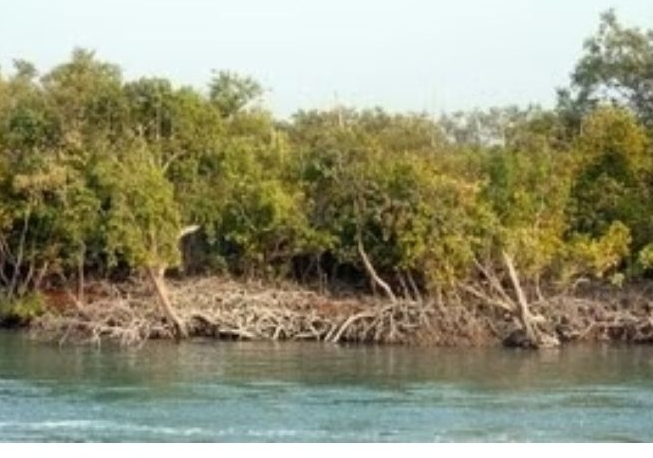
*Publishing of the first global ranking of mangrove forest status / an Iranian researcher's warning about the threats to mangroves in the country*
The first *global conservation classification of mangrove forests* was published by the International Union for Conservation of Nature (IUCN); A comprehensive assessment that experts say presents a worrying picture of the future of one of the world's most important coastal ecosystems. The results of this report show that 50% of mangrove ecosystem units in the world are in the Vulnerable (VU), Endangered (EN) or Critical (CR) categories, and that one out of five units is at risk of severe collapse.
According to the predictions presented in this report, *in the absence of effective measures* by 2050, about *7065 square kilometers* of mangroves will be lost and *23672 square kilometers* will be submerged. It is estimated that such a trend will cause *the release of 16% of the total stored carbon* in these ecosystems and its *social cost will be about 330 billion dollars*. Also, the protective role of mangroves against coastal disasters is likely to be lost for *about 1.2 million people* and reduced by *17 million fishing-days* per year.
Following the publication of this assessment, *Dr. Yaser Fatemi, a member of the scientific faculty of the National Research Institute of Oceanography and Atmospheric Sciences and the head of Bushehr Oceanology Center*, referring to the importance of the results, said:
"This report provides the first comprehensive picture of the conservation status of the world's mangroves and shows that these key ecosystems are under severe pressure. An important part of these threats is related to climate change, and sea level rise is still the main global threat to mangroves.
He explained:
About 11 billion tons of carbon are stored in mangroves, and this amount per unit area is ten times that of dry forests. Destruction of these forests is equivalent to the release of a huge amount of greenhouse gases and has significant climatic, economic and social consequences.
* Protection classification of Persian Gulf mangroves *
In explaining the results related to Iran and the region, Dr. Fatemi said:
"In the new IUCN assessment, mangrove forests in the Persian Gulf have been classified as *least concern* in terms of biotic and abiotic indicators, as well as the index of limitation in geographic distribution, but in terms of the index of changes in geographic distribution (decreasing the extent of forests), they have been classified in the *vulnerable* category. This decrease in level has caused the mangrove forests in the Persian Gulf and the Oman Sea to be placed in the *vulnerable (VU)* protection category.
He added:
"This classification means that if current trends continue, these ecosystems are likely to move towards more dangerous states. Therefore, the need for intervention and scientific management is very necessary."
---
*Iran's position in the region's mangroves*
According to the data published in various sources, there are about *250 square kilometers* of mangrove forests in the areas of the Persian Gulf and Oman Sea, of which Iran has the largest share with 138 square kilometers.
Dr. Fatemi explained:
"In Iran, the majority of mangrove forests are composed of the Avicennia marina species, and the Rhizophora mucranata species is found only in Sirik and Gabrik. The largest area is located in Qeshm and Bandar Khmeir Biosphere Reserve.
---
*Challenges of Iran's mangroves*
In various sources, several factors have been listed as threats to mangrove forests, the most important of which are the following:
* Proximity to polluting oil, gas and petrochemical industries
* Effluent from aquaculture farms
* Harvesting of wood, livestock grazing and illegal constructions
* Irregular tourism
* Plant pests
* Reduction of fresh water intake due to dam construction
* Entry of agricultural pesticides
He said:
"These pressures have disturbed the stability of the ecosystem in some areas and reduced the process of natural regeneration."
*Emphasis on the necessity of protection and integrated management*
In the final part, Dr. Fatemi pointed out the importance of long-term protection of these ecosystems and said:
"The protection and restoration of mangrove forests is not only necessary for the biodiversity and health of marine ecosystems, but also plays a vital role in reducing the effects of climate change, maintaining coastal security, food security and improving the well-being of coastal communities."
He added:
"The results of the IUCN global assessment can be an important basis for national and regional decision-making and show that planning, continuous monitoring and integrated management of these ecosystems should be prioritized."
